Music from United States

Cool Struttin'
** Special Time-Limited Offer ** Cool Struttin’ remains one of those Blue Note dates that somehow bottle the atmosphere of an era. Sonny Clark leads from the piano with Jackie McLean on alto saxophone, Art Farmer on trumpet, Paul Chambers on bass, “Philly” Joe Jones on drums, a line‑up that walks the line between laid‑back and razor‑sharp. Medium‑tempo themes feel designed for city sidewalks and late‑night conversations, while the solos emphasise feel over flash. Clark’s comping is buoyant and s…

A New Perspective
** Special Time-Limited Offer ** On A New Perspective, Donald Byrd imagines hard bop through stained glass, fronting a band with Hank Mobley on tenor saxophone, Herbie Hancock on piano, Kenny Burrell on guitar, Donald Best on vibraphone, Butch Warren on bass, Lex Humphries on drums, and a wordless choir led by Coleridge-Taylor Perkinson. Byrd’s trumpet sits at the crossroads of church, street, and conservatory, with the choir’s sustained voicings bathing the grooves in a luminous, spiritual glow…

Byrd In Flight
** Special Time-Limited Offer ** Byrd in Flight finds Donald Byrd’s trumpet carried aloft by shifting combinations of Jackie McLean on alto sax, Hank Mobley on tenor, Duke Pearson at the piano, Doug Watkins and Reggie Workman sharing bass duties, and Lex Humphries and Philly Joe Jones on drums. The album’s variety of line‑ups underlines Byrd’s range: from soulful, medium‑tempo burners to more introspective pieces that spotlight his warm tone and melodic ease. Each configuration finds a different…

Somethin' Else
** Special Time-Limited Offer ** Somethin’ Else remains one of those rare records where everything lines up: the room, the band, the material, and the moment. Cannonball Adderley leads on alto saxophone with Miles Davis’s trumpet cutting through alongside Hank Jones on piano, Sam Jones on bass, and Art Blakey on drums, a Blue Note all‑star line-up operating at peak equilibrium. The album sounds like a conversation between Adderley and Davis, two distinct voices who know exactly how far they can …
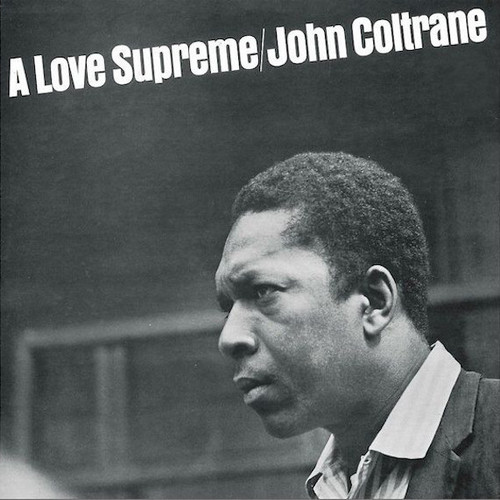
A Love Supreme
*2026 repress* "One of the most important records ever made, John Coltrane's A Love Supreme was his pinnacle studio outing, that at once compiled all of the innovations from his past, spoke to the current of deep spirituality that liberated him from addictions to drugs and alcohol, and glimpsed at the future innovations of his final two and a half years. Recorded over two days in December 1964, Trane's classic quartet-- Elvin Jones, McCoy Tyner, and Jimmy Garrison -- stepped into the studio and …

Kronos Quartet Performs Philip Glass
On Kronos Quartet Performs Philip Glass, Kronos Quartet turns four string quartets into a self‑portrait of the composer, charting his path from theatre and film scores to music written directly for the group, all in a language of pulsed clarity and slowly deepening harmony.

Lament For The Maker
“In 2022, with the closing of Mills College imminent and my bicoastal life coming to an end along with it, I requested of my colleagues works I could perform to mark this loss, honor the school's great legacy, and conclude the thirteen years I spent teaching there. They all graciously agreed. Lament for the Maker is the title of a Jack Spicer poem originally published in San Francisco, in 1963.”
There are three recently commissioned works for solo harp and the final piece, berlin bedroom, an ong…

Izipoh Zam (My Gifts)
Two years after the death of his mentor and boss, John Coltrane, and just before signing his own contract with Impulse!, Pharoah Sanders finally got around to releasing an album as a leader apart from the Impulse! family. Enlisting a cast of characters no less than 13 in number, Sanders proved that his time with Coltrane and his Impulse! debut, Tauhid, was not a fluke. Though hated by many of the jazz musicians at the time - and more jazz critics who felt Coltrane had lost his way musically the …
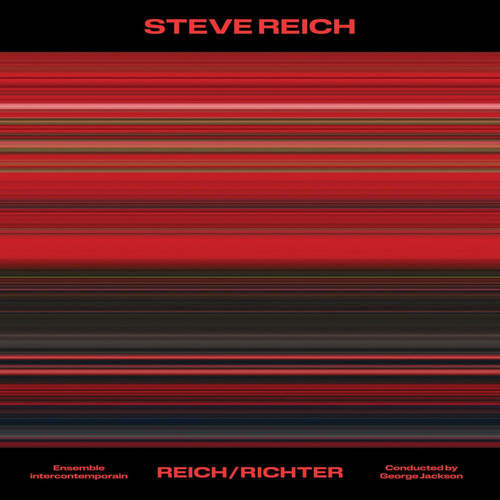
Reich/Richter
On Reich/Richter, Steve Reich joins Ensemble Intercontemporain and conductor George Jackson for a single 37‑minute arc of pulsed colour, a chamber‑orchestral score conceived in dialogue with Gerhard Richter’s moving stripes, where pattern, blur, and return become musical form.
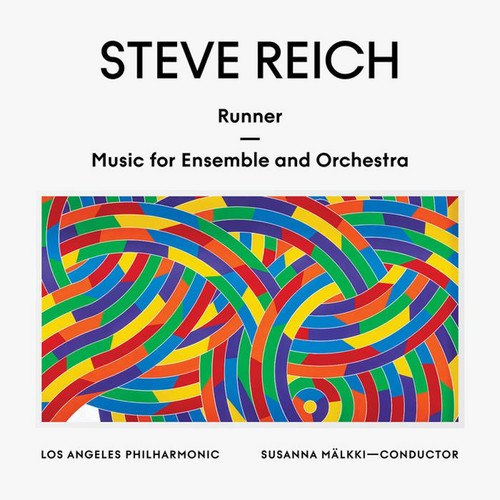
Runner - Music For Ensemble And Orchestra
On Runner / Music for Ensemble and Orchestra, Steve Reich joins the Los Angeles Philharmonic Orchestra and Susanna Mälkki for two late-period works that stretch his pulsed minimalism onto a large orchestral canvas, maintaining propulsive clarity while opening into shimmering, almost symphonic depth.

Tonight At Noon
"Tonight At Noon" compiles tracks from two earlier recordings sessions: one session from 1957 with Jimmy Knepper on the trombone, the drummer Dannie Richmond, Saxophone player Shafi Hadi and the pianist Wade Legge, which were released on the album "The Clown" (Atlantic 1260). The second session took place in 1961 with Booker Ervin and Roland Kirk on the saxophone, Knepper, the bassist Doug Watkins, Mingus at the piano and Richmond on the drums, and was released on "Oh Yeah" (Atlantic SD 1377).
T…
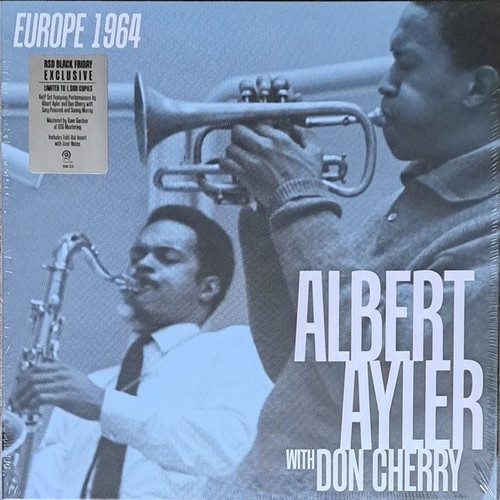
Europe 1964
Super tip! Holy ghost music. The real deal. The sound of four men tearing a hole in the fabric of what jazz was supposed to be and letting something else pour through - something ancient and raw and utterly new. In their short time together, Albert Ayler and Don Cherry created a body of music that genuinely exists in the moment. Oblivious to rules and aesthetic boundaries, they played what they felt on their nerve-ends, embracing mistakes and wrong turns as part of the experience of making art i…
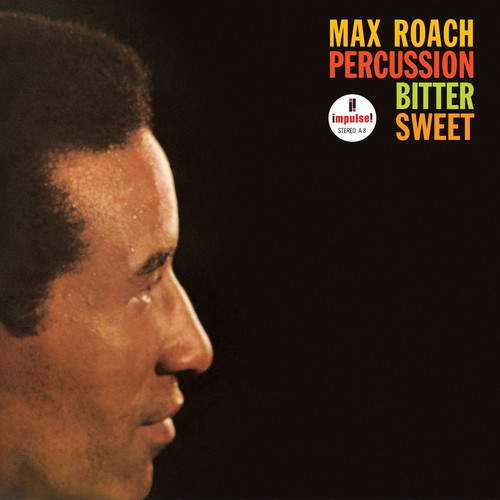
Percussion Bitter Sweet
August 1961. Van Gelder Studio, Englewood Cliffs, New Jersey. Max Roach - the man who reinvented jazz drumming alongside Charlie Parker and Dizzy Gillespie in the 1940s, the co-leader with Clifford Brown of the definitive hard bop quintet until tragedy struck in 1956 - enters the studio with something to say. Something that cannot wait. Something that demands a new language.
The year before, Roach had recorded We Insist! Freedom Now Suite for Candid Records, a searing response to the Civil Right…
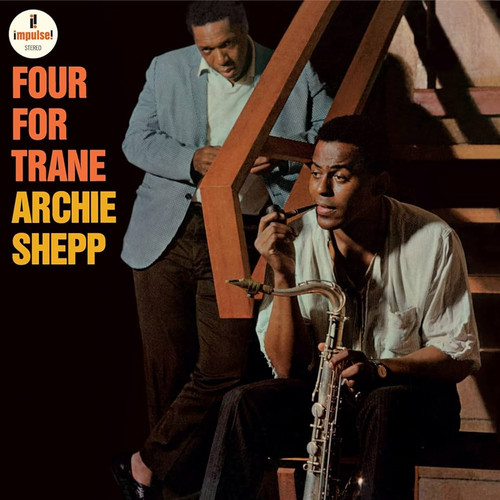
Four For Trane
August 10, 1964. Van Gelder Studio, Englewood Cliffs, New Jersey. A young saxophonist from Philadelphia enters the studio to record his first album as a leader for Impulse! Records. At his side, as co-producer, stands the man to whom he owes everything: John Coltrane. Archie Shepp was twenty-seven years old when Four For Trane was recorded - an age that in 1964 jazz still meant being an emerging voice. Born in Fort Lauderdale but raised in Philadelphia - the same Philadelphia as Coltrane, eleven…

Maggots On The Cliffside
Two names. Four decades of uncompromising noise. One collision. Genocide Organ - the masked Mannheim collective who have defined the outer limits of power electronics since 1985, founders of the legendary Tesco Organisation, architects of Leichenlinie and Save Our Slaves - meet Prurient, the Wisconsin-born, New York-forged vessel of Dominick Fernow, the man who built Hospital Productions from a teenager's bedroom label into the most influential noise imprint of the 21st century.
This is not thei…
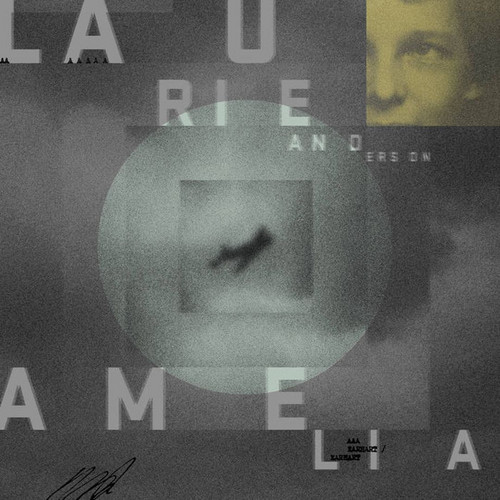
Amelia
On Amelia, Laurie Anderson turns Amelia Earhart’s final flight into a 22-part dream-report: chamber strings, electronics and spoken word trace a route from Oakland to disappearance, where navigation data, weather reports and ghostly lullabies fold into one drifting, time-bent monologue.

Muir
Tip! *60 copies limited edition* kalimba snare towel homemade drum ceramic paper chain bells shakers skewers stick drums broken cymbal bass drum guitar string thing coolie hat bustelo cans concrete floor psaltery pianolette door chime washer drum metal chair elbows snare pinecones snare manual tape handheld aluminum sample hands pine cone washer drum bowls superball bow brushes kit chopsticks spatula stickerball spent drumhead snare skewers table tines bent cymbal hands pot lids water and stuff,…
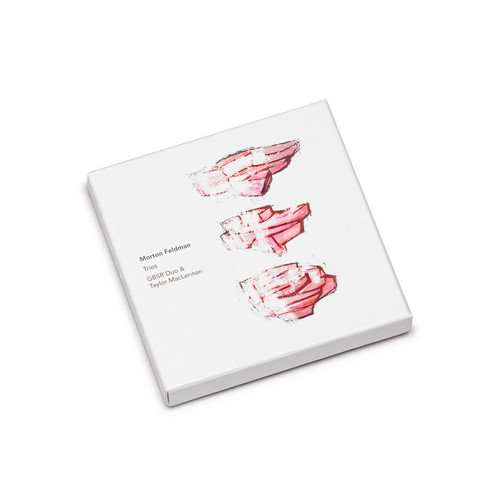
Trios (6CD Box)
In the final decade of his life, Morton Feldman turned his attention to the trio format with an intensity that would yield some of the most profound and uncompromising music of the twentieth century. Between 1978 and 1984, he composed three monumental works for flute, piano and percussion that together constitute an immense meditation on time, memory and the irreducible strangeness of sound itself. This landmark 6CD box set from Another Timbre presents all three pieces — totalling six and a half…

G.R.
** Tape. Digital download included. ** Hospital Productions has finally reissued the classic G.R. by Deathpile, the true crime album that stands as one of power electronics' most uncompromising and psychologically penetrating works. Originally initiated during the hunt for the Green River Killer and completed after the capture of Gary Ridgway, this album represents a singular achievement in the intersection of criminal psychology and extreme electronic music. This regular edition on black vinyl …
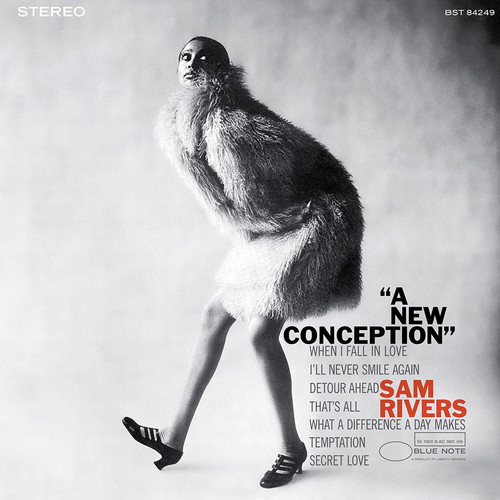
A New Conception
After releasing two astonishing albums of original material with his remarkable debut Fuchsia Swing Song (1964) and the follow-up Contours (1965), multi-instrumentalist Sam Rivers went another direction on his third Blue Note album A New Conception (1966) by presenting a set of standards that were given riveting interpretations with a quartet featuring Hal Galper on piano, Herbert Lewis on bass, and Steve Ellington on drums. Despite the well-worn repertoire—including the chestnuts “When I Fall I…