François Bayle
50 Ans d'Acousmatique (15CD Box)
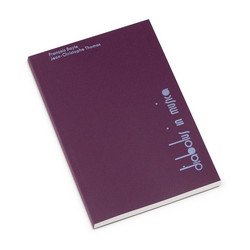
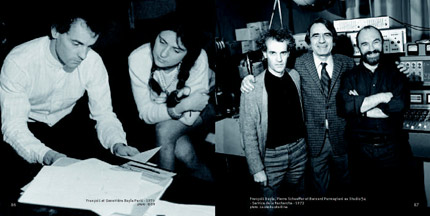
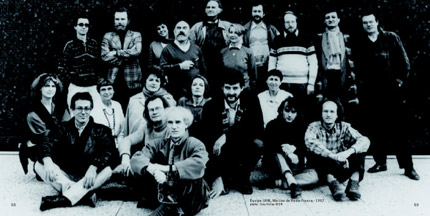
Few figures have shaped the course of electroacoustic music as profoundly and as persistently as François Bayle. This lavish 15-CD box set on INA-GRM gathers fifty works composed across half a century - from 1963 to 2012 - into a single, staggering document. Sixteen hours of acousmatic creation, 228 tracks, accompanied by a 160-page illustrated booklet with a 2012 interview by Thomas Baumgartner, an annotated catalog of works by Régis Renouard Larivière, and photographs spanning the full arc of Bayle's career. It is one of those rare releases that amounts to a complete artistic biography in sound.
 |
 |
 |
 |
 |
 |
 |
 |
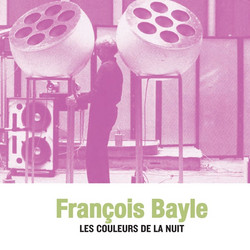
Born in 1932 in Toamasina, Madagascar, where he spent his first fourteen years, Bayle arrived at music through a self-taught path in Bordeaux and Paris before encountering the figures who would orient his life's work. Studies with Olivier Messiaen, summer courses at Darmstadt alongside Boulez, Ligeti, and Stockhausen - but it was Pierre Schaeffer who gave him the decisive tools. In 1960, Bayle joined the Groupe de Recherches Musicales. Six years later, Schaeffer placed him at its head, and he would direct the GRM for over three decades, until 1997. During those years, Bayle was not merely an administrator: he was the architect of an entire infrastructure for listening. In 1974 he conceived the Acousmonium - an orchestra of eighty loudspeakers of differing size and shape, designed to spatialize recorded sound into a penetrable, immersive field. He launched the INA-GRM record label in 1976. He organized concerts, radio broadcasts on France Musique, and built the Acousmathèque, an archive of over two thousand works stretching back to 1948. The term "acousmatic" itself - borrowed from Pythagoras via the poet Jérôme Peignot - owes its contemporary currency largely to Bayle's insistence on naming and theorizing a practice that had, until then, resisted clear definition.
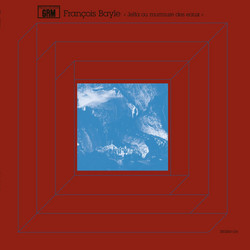
But the institutional legacy, however remarkable, would mean little without the music. And the music is extraordinary. Bayle's compositions unfold as what he called "utopias" - constructed in the form of suites, trajectories, initiations, each investigating the textures and grammars of sound with a precision that is both rigorously intellectual and deeply sensuous. The box set traces a chronological path through these utopias: from the early avian fantasies of Trois Rêves d'oiseau (1972), through the recorded-sound explorations of the Lebanese caves in Jeîta ou Murmure des eaux (1970), the dense, polyphonic superpositions of Vibrations composées and Grande Polyphonie (1973-75), the sensually charged cosmic expanses of Erosphère (1978-80), the shadow-theater of Théâtre d'ombres (1989, Prix Ars Electronica), to the late meditations of Rien n'est réel (2010). Each work is both a discrete statement and a chapter in a larger, accumulating argument about what recorded sound might become when treated not as reproduction but as raw material for a new kind of musical thought.
|
|||
 |
Bayle's timbral vocabulary is unmistakable - a restless interplay of articulation and fluidity, abrupt gestural energy dissolving into slow, colored drift. His formal thinking operates on multiple scales simultaneously: microscopic attention to the grain and envelope of individual sounds sits within vast architectural spans that reward sustained immersion. There is a painterly quality to the way he handles spectral color, and a novelist's sense of pacing in the way episodes succeed one another - never illustrative, never merely abstract, always hovering in a zone where physical sensation and intellectual form become indistinguishable.
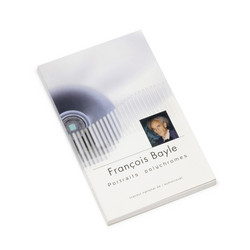
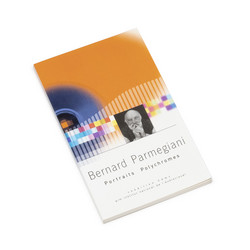
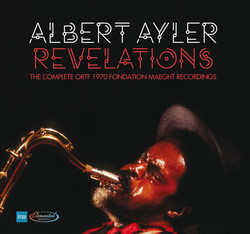
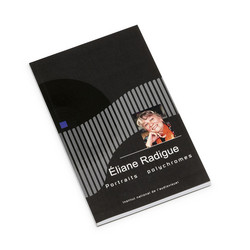
50 Ans d'Acousmatique takes its rightful place alongside the monumental INA-GRM retrospective boxes of Pierre Schaeffer, Pierre Henry, Bernard Parmegiani, Eliane Radigue, and Iannis Xenakis - together forming one of the most extraordinary archival constellations in the history of recorded music. For anyone who has followed the thread of musique concrète and its descendants, this is foundational listening. For those arriving fresh, it is an invitation into a sonic universe of remarkable depth - proof that half a century of sustained creative inquiry can yield a body of work that remains, in every sense, still unfolding.