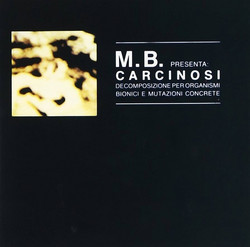
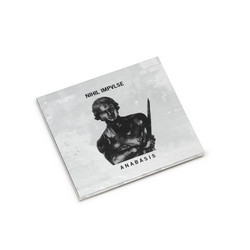
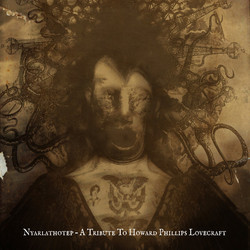
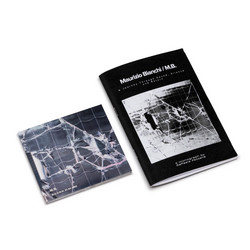
Very few artists have taken sound as far as Maurizio Bianchi did, and even fewer have had the conviction to fall completely silent at the height of their radicalism. A Journey Through Sound, Silence and Return is Raffaele Pezzella’s attempt to map that singular trajectory: from the claustrophobic tape laboratories of the Italian industrial underground to decades of absence, and finally to a wary, measured re-entry into public audibility. The monograph does not seek to domesticate Bianchi’s work or soften its edges; instead, it treats his life as an extension of the same uncompromising logic that produced those landmark recordings - brutal in texture, ascetic in method, visionary in their refusal of comfort.
Pezzella reconstructs the early context with forensic patience. In a landscape only tenuously connected to the UK and German scenes, Bianchi’s work emerges as something more than a derivative response to industrial culture: it is an internal necessity, built from cheap electronics, tape hiss and a deep distrust of musical convention. The book follows his progression from tentative experiments to the stark, corrosive works that would define his reputation, revealing an artist who treats sound less as expression than as a form of inquiry. Each cassette, each LP, becomes a test of how far repetition, noise and structural negation can be pushed before they stop being “music” and become something more like sonic ethics.
At the heart of the monograph lies the decision to stop. Pezzella lingers on the moment when Bianchi, having carved out a small but fervent following, turns away from the very world he helped to shape. Silence here is not framed as failure or exhaustion but as a final, extreme gesture - a continuation of his subtractive logic carried into life itself. The narrative explores the personal, spiritual and aesthetic forces that led to this withdrawal, showing how his absence became as charged, and as enigmatic, as the records themselves. In doing so, the book invites the reader to consider what it means when an artist decides that the only coherent next step is to say nothing.
The eventual return complicates any neat arc of renunciation. Pezzella treats Bianchi’s reappearance not as a conventional “comeback” but as an uneasy negotiation with a changed world: different technologies, a transformed underground, an audience retroactively mythologizing his early work. Rather than simply celebrating a legend’s revival, the monograph pays close attention to how his later output reframes the earlier catalogue, how persistence and self-doubt coexist, and how a previously hermetic figure navigates being constantly read, archived and reissued. The result is not hagiography but a critical portrait of an artist whose life and work are inseparable from questions of integrity, extremity and the right to disappear.
Format A5
Language: English
Pages: 102