Maurizio Bianchi
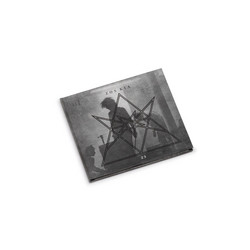
M.U.U.N.H. 31.04.1982
*100 copies limited edition* Emerging from one of the most decisive phases in his oeuvre, M.U.U.N.H. 31.04.1982 finds Maurizio Bianchi distilling his already radical practice into something even more severe: sound not as narrative, gesture or theme, but as a condition into which the listener is thrown. Recorded in 1982, when the Italian underground remained largely detached from international networks and DIY circulation was closer to rumor than infrastructure, the piece documents an artist pursuing an inner logic with almost monastic discipline. Rather than seeking alignment with British industrial collectives or German kosmische offshoots, Bianchi works in a state of deliberate isolation, shaping an idiom of subtraction and repetition that feels hermetically sealed, yet strangely porous to existential anxiety.
The title M.U.U.N.H. 31.04.1982 reads like a coded transmission, and in many ways that is what the work is: an encrypted statement of intent from Bianchi’s early-eighties conceptual framework, where “music” becomes an obsolete word and is replaced by a notion of sound as environment. Here, electronics, primitive synthesis and tape manipulation are not tasked with expressing emotion; they operate as impersonal forces, generating a suspended field that the listener inhabits more than simply hears. Patterns do not develop toward catharsis or resolution. Instead, they hover at the edge of stasis, with minimal shifts in texture and density assuming an outsized psychological impact, like a faint flicker in an otherwise darkened room. The experience is less a journey than a vigil.
In this context, the absence of linear progression or overt dynamics is not a lack but a method. By withholding narrative cues and melodic consolation, M.U.U.N.H. 31.04.1982 forces a naked encounter with sound as raw material: grain, hiss, hum, pulse. What might initially feel monotonous reveals, with time and attention, a complex internal life, where each microscopic variation becomes a magnifying glass on one’s own listening habits, thresholds and tolerance for uncertainty. Bianchi’s ascetic use of technology renders the apparatus almost invisible. The machines are present only in their residual artifacts - clipped frequencies, saturated tape, mechanical regularity - a reminder that this is work built from limited tools pushed to uncompromising ends.
Heard today, the piece functions as both harbinger and anomaly. On one hand, its static tension and depersonalized atmosphere clearly prefigure the isolationist ambient, dark drone and “negative space” minimalism that would emerge in the following decades, whether in post-industrial dronescapes or in the more clinical realms of sound art. On the other, it remains stubbornly tied to the raw tactility of early industrial experimentation: the sense of dirt in the circuitry, of physical tape being wound, rewound and erased, of an artist interrogating the material itself rather than smoothing it into an anonymous digital blur. That friction between prophetic abstraction and very specific technological constraint is precisely what keeps the work vital.
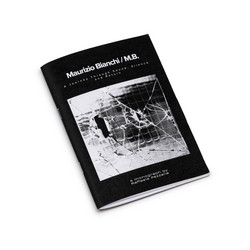
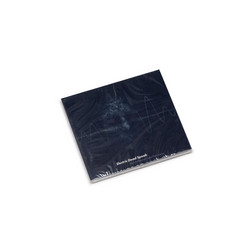
This new edition appears within the Archive series of Eighth Tower Records, a curatorial framework devoted to bringing back into focus those experimental works that once circulated in tiny editions, if at all, and risk being absorbed into myth or footnote. Rather than “updating” Bianchi’s sound, the reissue treats it as an artifact whose sharp edges must be preserved. The remaster by Raffaele Pezzella does not aim at brightness or modern gloss; it burrows into the existing recordings to recover depth, contrast and low-level detail while leaving intact the austerity, the claustrophobic air and the deliberate harshness that define the original. Noise remains noise, but now its contours emerge with greater clarity.
Published by Eighth Tower Records
Re-mastered by Raffaele Pezzella
Layout by Matteo Mariano