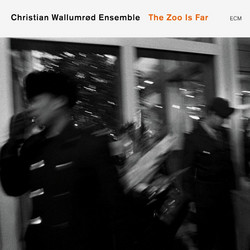
Fabula Suite Lugano is the second ECM album by the sextet of Norwegian pianist and composer Christian Wallumrød, following The Zoo Is Far. Most of its members come from jazz, but the music has moved away from it, towards a through-composed ensemble music shaped by contemporary classical writing, baroque music, Norwegian folk and church music. Its eighteen pieces, many of them short, unfold as a suite in which timbre and the blend of instruments matter more than solos.
Wallumrød plays piano, harmonium and toy piano. Eivind Lønning is on trumpet, Gjermund Larsen on violin, Hardanger fiddle and viola, and Giovanna Pessi on baroque harp, with cello and Per Oddvar Johansen's drums, percussion and glockenspiel completing the line-up. Lønning was new to the trumpet chair, and the group had played the material regularly since the previous album. It was recorded in June 2009 at the Auditorio of Radio Svizzera in Lugano, in collaboration with RSI Rete Due, with Markus Heiland as engineer and Manfred Eicher as producer.
The opening Solemn Mosquitoes began as a solo piano improvisation Wallumrød recorded at home, later arranged for the sextet, and its trills of fiddle and piano suggest the insect of the title. Quote Funebre is built on chords taken from Olivier Messiaen and Morton Feldman, with Larsen commenting between the sparse piano harmonies. The Scarlatti Sonata is a close transcription of the first part of Domenico Scarlatti's K 87. I Had a Mother Who Could Swim, prompted by a swim in Lake Lugano and a memory of Nina Simone, carries hints of gospel and slow blues. Other pieces are short duos and solos, among them a drum feature for Johansen and the closing piano Solo.
In The Guardian, John Fordham noted that beside its slow, near-motionless passages the record has "plenty of eager activity", starting with the spooky trills of the opening track. He also felt that the six players' resources keep growing. In DownBeat, Peter Margasak wrote that Wallumrød's creations "have never sounded more bewitching and elusive". Textura, reviewing it in 2010, singled out the timbral interplay, though it found the eighteen short tracks hard to hold together as a whole.
This is the CD edition, ECM 2118, first released in October 2009.