We use cookies on our website to provide you with the best experience. Most of these are essential and already present.
We do require your explicit consent to save your cart and browsing history between visits. Read about cookies we use here.
Your cart and preferences will not be saved if you leave the site.
play

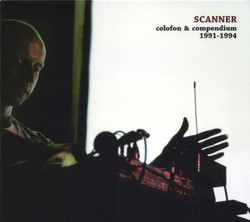
Scanner

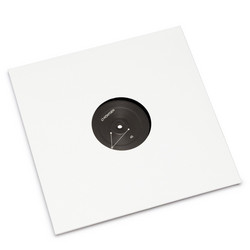
Colofon & Compendium 1991-1994 (2LP)

Label: Sub Rosa

Format: 2LP

Genre: Electronic

In stock

€27.50
€15.40
VAT exempt
+
-

500 Copies. Gatefold double LP version. Telephone terrorism tactics and voyeuristic ambience from the Scanner archive 1991-1994. Exclusive unreleased material. An eavesdropper's delight. Scanner is Robin Rimbaud, the British artist who took his name from the most notorious tool of his early practice: the radio scanner he used to intercept private mobile phone conversations and fold them, uninvited, into his music. Colofon & Compendium 1991-1994 gathers the raw material of exactly that period, drawn from a vast personal archive of DAT tapes, cassettes and minidiscs that Rimbaud finally sat down to digitize in 2010. Out of more than 600 hours of largely unreleased recordings, Sub Rosa helped him narrow the focus to the controversial scanned-telephone works, setting aside the film scores, dance commissions and remixes to concentrate on the eavesdropping that made his name.

What emerges is less a finished album than a thinking process laid bare: sketches, fragments and captured moments of inspiration from the years that produced his landmark early records. The longer sample-based pieces (The Luminous Past, Underwater, Blind Electricity, Red Exile) are threaded together by a series of short interludes, the "Headz" tracks, originally commissioned by James Lavelle for his Mo'Wax compilation series and never used. Two pieces, Blind Electricity and Moth Open Math, started life as remixes before drifting off into something entirely their own. The result is a soundmap of early-1990s London assembled from overheard voices, by turns tender, hostile, banal and unguarded, the city caught mid-sentence. Critics have placed it on a level with the celebrated 1993 to 1995 albums, noting that it runs rougher and more raucous than those records, with plenty of moments for longtime listeners to trace where these ideas later resurfaced. Mastered by Jos Smolders

"In the summer of 2010, I worked through my extensive archive of DAT tapes, cassettes and mini-discs, which had accumulated since 1977, and with the help of my ever-capable and patient interns, began the process of digitizing these materials. The result -- over 600 hours of largely unreleased material -- was overwhelming to say the least, and that was only the edited highlights, as we never touched any material prior to 1991. Most of these recordings have never been heard before or released, though ideas, voices and samples may have reappeared in altered forms on future releases. Very little of it is 'finished' in any sense; it is more of a thinking process, sketches towards something else, a moment of inspiration briefly captured. At the invitation of Sub Rosa, I honed down the selection to the controversial scanned telephone call works by-passing film scores, dance pieces, remixes and so on. The shorter pieces interspersed throughout the album were originally commissioned by James Lavelle for an edition of his Mo' Wax compilation label series Headz, but for unknown reasons were never included. Two of the works, 'Blind Electricity' and 'Moth Open Math,' began life as remixes for other artists but then took on a life entirely of their own so were never issued in this form. 'Underwater' was released in an edition of 100 copies on 7" vinyl on Syntatic Records Vienna, April 1995. 'Tape Junk' and 'Who Else Is There?' were released on 7" vinyl on Soul Static Sound, October 1996." -- Robin Rimbaud


 

Details
Cat. number: SRV341
Year: 2012
Notes:
Limited edition of 500 copies. Liner Notes: In the summer of 2010 I worked through my extensive archive of DAT tapes, cassettes and minidiscs, which had accumulated since 1977, and with the help of my ever capable and patient interns, began the process of digitizing these materials. The result, over 600 hours of largely unreleased material, was overwhelming to say the least, and that was only the edited highlights, as we never touched any material prior to 1991. Most of these recordings have never been heard before or released, though ideas, voices and samples may have reappeared in altered forms on future releases. Very little of it is 'finished' in any sense, it is more of a thinking process, sketches towards something else, a moment of inspiration briefly captured. At the invitation of Sub Rosa I honed down the selection to the controversial scanned telephone call works by-passing film scores, dance pieces, remixes and so on. The shorter pieces interspersed throughout the album were originally commissioned by James Lavelle for an edition of his Mowax compilation label series Headz, but for unknown reasons were never included. Two of the works, Blind Electricity and Moth Open Math, began life as remixes for other artists but then took on a life entirely of their own so were never issued in this form. Underwater was released in an edition of 100 copies on 7" vinyl on Syntatic Records Vienna, April 1995. Tape Junk and Who Else Is There? were released on 7" vinyl on Soul Static Sound, October 1996.
Lone explorer of this terra—or rather aether incognita back then, Colofon & Compendium consists of sketches and “thinking processes” undertaken in the early nineties and have not been heard before.Read more

There is, believe it or not, an actual “Singularity University” in Silicon Valley, run by a couple of charlatans calling themselves “futurists,” whose “lethal doses of banalities, inanities, and generalizations”, warns one critic, “ought to carry advisory notices.” As mankind’s media and its message continue to meld, much more germane, compelling research insights are offered by the early works of Professor Scanner, now compiled in handy compact disc format by the ultimate modernist/postmodernist archival label, Belgium’s Sub Rosa.

We used to vent about the dark nights of our soul in religious poetry, like St. John of the Cross. These “dark nights” represented the hardships and difficulties the soul meets in detachment from the world and the craving for union—with the Creator, with our communities, with somebody, anybody. Now we do it in blogs, vlogs, and over the telecommunications lines. Scanner, London’s Robin Rimbaud, whose portfolio now bulges with installations, commissions and collaborations, remixes, and social and cultural criticism, famously took his name from the device with which he plucked random cellphone conversations from the air in his earliest recordings. While others were sampling pop tunes, Scanner was sampling the vox populi. Gaining a name, he also gained well-deserved renown for his mix of unlikely spoken word and ambient music.

Lone explorer of this terra—or rather aether incognita back then, Colofon & Compendium consists of sketches and “thinking processes” undertaken in the early nineties and have not been heard before, linked by short pieces originally commissioned for a Mowax compilation but never included and three singles. The result is smooth-flowing, kitchen-sink theatre, a soundmap of London angry, amused, boorish, bitchy, comforting, confrontational, distraught, drunk. The city is a nexus where weirdness has accumulated over time and although there is no way for the listener to know, it all seems to be coming out at night. It certainly benefits by being listened to at night.

Musically, Scanner pulls out all the tricks, easing us through a difficult patch with a jolly, cheap drum machine, underscoring noir drama with sampled orchestral strings or cruel industrial rhythms, surprising us with a hybrid baroque-tribal dance, buoying our spirits with some truly graceful ambient. In the end, he succeeds in creating one of those uncommon moments when a themed album reaches upward to achieve its ideal reason for existing. Far from retrospective, this is a new, vital work sprawling with perspectives on how the new social networks are both exploding old structures from within and exposing the same raw strengths and weaknesses we have borne from time immemorial.