Chiarosi, Fabio Fabor, Oscar Rocchi
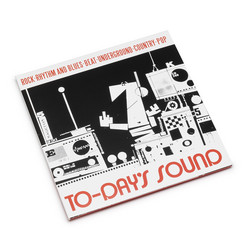
Dramatest 1974 (LP + CD)
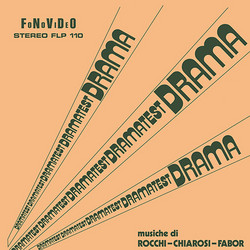
Absolute music composed for keyboards whose sounds have been processed to obtain particular effects, timbres, and soundscapes. That phrase, clinical and precise, barely hints at the strange beauty of Dramatest, a 1974 collaboration between two of Italian library music's most inventive figures: the Florentine jazz pianist Oscar Rocchi (working here under his pseudonym Chiarosi) and the Milanese polymath Fabio Fabor. Originally released on Fonovideo, one of several sublabels operated by Fabor's own publishing company Minstrel, Dramatest represents the encounter of two musicians whose careers had traversed remarkably different terrain before arriving at this fourteen-track exploration of the electronic spectrum.
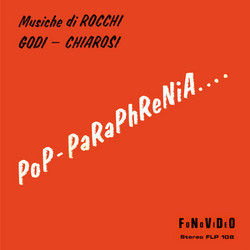
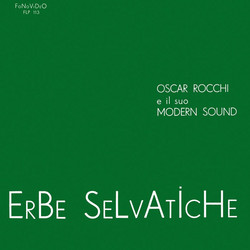
Rocchi began his career in the 1960s as a session musician in Milan, working as pianist for prominent Italian singers including Ornella Vanoni. But it was in the world of Italian jazz that he made his reputation. His collaboration with trumpeter Oscar Valdambrini and trombonist Dino Piana, two legendary figures in the Italian scene, produced the magnificent Afrodite (1974), released on Armando Sciascia's Vedette label with a rhythm section featuring Sante Palumbo on piano, Giorgio Azzolini on bass, and the young Tullio De Piscopo on drums. Rocchi appeared on electric piano, his touch elegant and supple. Throughout the 1970s, he balanced his jazz work with an increasingly prolific output of library music, creating such sought-after albums as Pop-Paraphrenia (1972, also released under the title Jungle Birds), Erbe selvatiche, and the Stressorama volumes co-written with Giancarlo Barigozzi and Fabor. His quintet albums Alchemy in Jazz and Jazz Progression remain cult items among collectors.
Fabio Borgazzi, better known as Fabio Fabor (and occasionally as Giorgio Fabor), occupied an entirely different position in Italian music. Born in Milan in 1920, he studied composition and conducting at the Giuseppe Verdi Conservatory before launching a career that would eventually encompass more than 500 songs, eight appearances at the Festival di Sanremo, film scores for directors like Dino Risi (Poveri ma belli, 1956) and Gianni Puccini (Carmela è una bambola, 1958), operas, symphonies, chamber music, and some of the most extraordinary electronic experiments ever committed to Italian vinyl. Through his Minstrel publishing company and its numerous sublabels (World, Hard, Flam, Fonovideo, Ring), Fabor released hundreds of library records, many composed by himself under various pseudonyms.
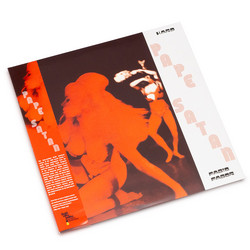
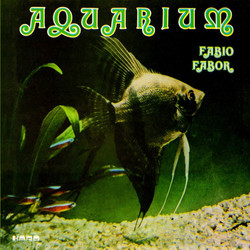
In the late 1970s and early 1980s, Fabor devoted himself to experimental electronic music with an intensity that bordered on obsession. Using analog synthesizers (ARP 2600, ARP 3620, ARP Omni, Roland System 700), sequencers, and drum machines, he created immersive soundscapes that anticipated the dark ambient and occult electronic movements by decades. His masterpiece from this period, Pape Satan (released on the Hard label sometime between 1978 and 1981), became an underground cult object, rediscovered by Miles Whittaker of Demdike Stare at a Rome flea market and subsequently championed in avant-garde circles. The album Aquarium explored similar territory with aquatic themes. In 1976, Fabor even hosted a RAI television program called Anche questa è musica (This Too Is Music), introducing the Italian public to experimental electronic composition. He continued composing until the end of his life, recording his final album Caramerica, a tribute to George Gershwin and the Great American Songbook, in 2010 at age ninety. He died in Rome in August 2011.
Dramatest predates Fabor's most extreme electronic experiments, but it shares their spirit of restless exploration. The album draws its sounds from an arsenal of keyboards: mellotron, moog, spinet, clavicembalo (harpsichord), celeste, organ, and electric piano. These instruments are processed, layered, and manipulated to create textures that hover between the familiar and the alien. Some tracks float with spacious, almost ambient calm, recalling the instrumental albums Fabor had released under his own name. Others plunge into darker corners that feel like precursors to Italian horror soundtracks, their compressed intensity suggesting Goblin in miniature. Still others feature light funky rhythms that connect the album to the broader world of 1970s Italian library production.
The track titles themselves constitute a kind of found poetry, their eccentric spellings and neologisms testifying to the playful spirit that often animated this music: "Toccata 2000," "Elettroterapia," "Agopuntura" (Acupuncture), "Ostinadanza," "Industrial shok" (the misspelling preserved from the original), "Sweet Hobby," "Predisposizione," "Nero sud" (Black South), "Circuitistica," and "Tastodrama" (Key-drama). This sublime madness in the titling, as one Italian critic noted, reaches heights both absurd and wonderful, a further element that makes Dramatest one of the finest examples of the lost art of Italian library music.
The album was recorded for Fonovideo, a sublabel devoted to music for film and television production. Like most library records of its era, Dramatest was never intended for commercial release; these were tools for sound editors, available only through specialized catalogs and priced beyond the reach of ordinary collectors. The original pressing remained virtually unknown outside professional circles until the recent wave of Italian library reissues brought albums like this back into circulation.
This Schema Records edition presents Dramatest on vinyl for the first time since 1974, accompanied by a bonus CD containing the complete program. Note: the spine of this release is misprinted with the title "Mr. Diabolicus, Mr. Mysterious," another Fabor album that Schema reissued simultaneously. Consider it an additional touch of eccentricity, perfectly in keeping with the spirit of the music within.