Stefan Thut
drei, 1-21
Tracked express shipping from Italy, no customs or import VAT in the EU. Shipping costs
2013 release **
From the early 2000s, Stefan Thut began a series of scores named according to the number of performers, somewhat like Cage's later works. Ranging from one performer to seven, including the more indeterminate "some" and "many," each score is very open, completely undefined, with a few written indications (limited mainly to volume restrictions), plus a kind of guiding thread to follow (composed of letters, lines, etc.) during the performance, without any indication of duration, form, or anything else. Why not, then, create this score remotely, I imagine without the performers knowing what the others might be playing? This is the approach of Johnny Chang (violin), Jürg Frey (clarinet) and Sam Sfirri (melodica) who recorded this work between Switzerland and the United States, over a period of one year, and also chose to make each part last 3 minutes (an approach certainly linked to the "structure" of the pieces as much as to the constraint of being able to insert each part into a disc). The 21 parts of drei are composed in the same way: each member of the trio is assigned two blocks of passages to play (between one and three). This is the reproduction found inside the sleeve, at least, and I don't know if the original piece contains any additional written indications. In any case, the trio plays this score using only notes—simple, sensitive, and regular. Notes of varying lengths, lasting perhaps between three and twenty seconds, separated by long silences. The sonic space is delicately sculpted by the notes; the silence seems to be carved out by the interventions, or perhaps it is the interventions that are sculpted by the silence. It is difficult to separate the two, because in these scores, it is certainly the duration between each sound that matters most. And the trio is careful to do just that: the sound interventions are monotonous, discreet, and delicate, precisely so as not to draw too much attention to themselves, so that instead the duration between each sound intervention takes center stage. It's a very precise execution, in that each sound is always equal to the others in volume and intensity, and the interaction between sounds is forgotten and negated in favor of the interaction between sound and silence. It's beautiful, subtle, precise, and demanding.
Release notes
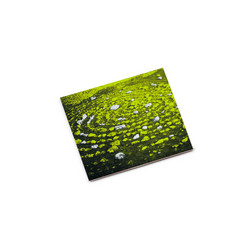
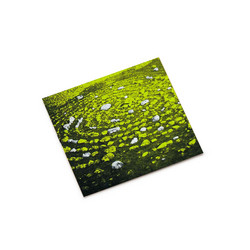
drei, 1-21 (2009) Johnny Chang recorded in Zuchwil (CH) on January 15 2012. Sam Sfirri recorded in Charleston (USA) on October 22 2012. Jürg Frey recorded in Aarau (CH) on October 26 2011. CD attached to three-panel gatefold cardstock sleeve.
| 1 | Untitled | 3:06 | |
| 2 | Untitled | 3:06 | |
| 3 | Untitled | 3:06 | |
| 4 | Untitled | 3:06 | |
| 5 | Untitled | 3:06 | |
| 6 | Untitled | 3:06 | |
| 7 | Untitled | 3:06 | |
| 8 | Untitled | 3:06 | |
| 9 | Untitled | 3:06 | |
| 10 | Untitled | 3:06 | |
| 11 | Untitled | 3:06 | |
| 12 | Untitled | 3:06 | |
| 13 | Untitled | 3:06 | |
| 14 | Untitled | 3:06 | |
| 15 | Untitled | 3:06 | |
| 16 | Untitled | 3:06 | |
| 17 | Untitled | 3:06 | |
| 18 | Untitled | 3:06 | |
| 19 | Untitled | 3:06 | |
| 20 | Untitled | 3:06 | |
| 21 | Untitled | 3:06 |
- Jürg Frey
- Clarinet
- Stefan Thut
- Composed By, Edited By, Mastered By [Pre-Mastering], Recorded By
- Antoine Beuger
- Executive-Producer
- Daniel Bechem
- Layout
- Sam Sfirri
- Melodica
- Johnny Chang
- Violin