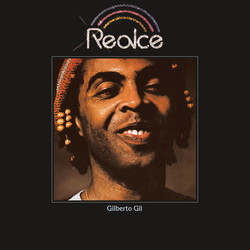
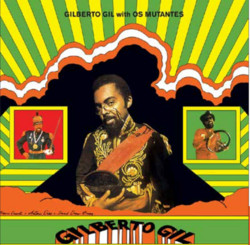
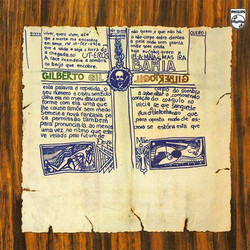
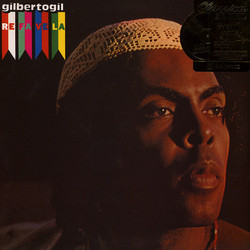
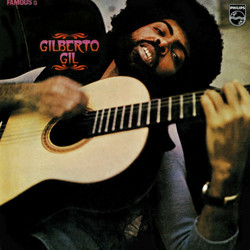
Louvação marks Gilberto Gil’s emergence not just as a gifted young singer, but as a composer intent on redrawing Brazilian popular music from the inside. Released in the mid‑1960s, the album stands at a threshold moment: bossa nova’s cool has begun to fray, the Northeastern diaspora is reshaping urban sound, and the political climate is tightening. Gil responds with songs that feel rooted and exploratory at once, using the language of samba, baião and xote as launching pads rather than cages. The title itself - “praise,” “invocation” - hints at how these tracks function: part street‑corner hymn, part subtle manifesto, part report from Salvador and Recife smuggled into the heart of Rio‑São Paulo modernity.
The arrangements mirror this duality. On one hand, the record glows with the polished studio craft of its era: agile rhythm sections, bright horns, occasional choral responses that nod towards radio and TV variety shows. On the other, there is an unmistakable grit and asymmetry in the way percussion, bass and guitar lock together, drawing on the polyrhythms of Afro‑Bahian traditions and the loping accents of Luiz Gonzaga’s sertão. Gil’s guitar often acts as both harmonic bed and rhythmic spur, chipping at the groove while the band punches holes around him. Woodwinds and brass trace countermelodies that feel less like decoration than like parallel commentaries on the lyrics, echoing or questioning the sung line.
Vocally, Gil is already unmistakable: supple yet slightly grainy, capable of flipping from gentle lilt to urgent declamation without showboating. His phrasing carries the cadences of prayer, carnival chant and conversational aside all at once. Lyrically, he leans into images of work, procession, street life and spiritual invocation, sketching a Brazil in motion that is as much about the interior and the Northeast as it is about the coastal metropolises. There is devotion in these songs, but it is rarely abstract; praise is directed towards people, places, or moments of collective intensity as much as towards the divine. Underneath the apparent simplicity of the verses, one can already sense the political consciousness that will become more explicit later in his career.
Heard today, Louvação feels like a prelude that already contains much of what will define Gilberto Gil’s trajectory. The seeds of tropicalismo are present in the way he treats tradition as material to be recomposed rather than preserved, in the subtle collisions between folk forms and urbane arrangements, in the willingness to let liturgical language sit alongside everyday slang. Yet the album also has its own distinct aura: a youthful radiance and clarity of purpose that makes even its most modest tracks feel consequential. As an early statement, Louvação stands less as a period curiosity than as a foundational text - the sound of an artist learning to praise the world while quietly preparing to transform it.