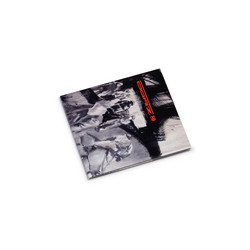
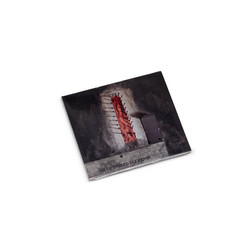
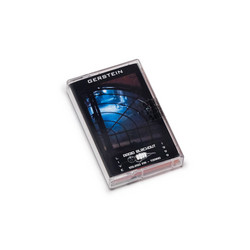
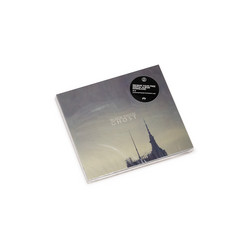
*2025 stock. 190 copies limited edition* In 1988 Christa Päffgen, better known as Nico, one of the most influential and charismatic female figures in all contemporary popular music, died. "The End", released in 1974, is an album with an inexhaustible twilight charm and it is unanimously remembered by critics and audiences as one of the greatest masterpieces of the unforgettable German author.
"Theend", published by Luce Sia and S.M.Y.W. Prod., is nothing more than the complete rewriting of Nico's album by Gianluca Becuzzi and Massimo Olla, which follows the successful "RedruM" of last year, where the two ventured into the personal rereading of murder ballads of the folk tradition . This second test with four hands and two heads by Becuzzi and Olla should be seen as a deferential and heartfelt tribute to Nico and his work, made according to their personal musical vision and their distinctive experimental figure. The remake of the two Italian artists, in continuity with "RedruM", is characterized by informal solutions, a taste for the essentials and acoustic sounds: Becuzzi's voice, the percussions and Olla's self-made instruments (chordophones, mollophones) to which only sporadically a guitar adds.
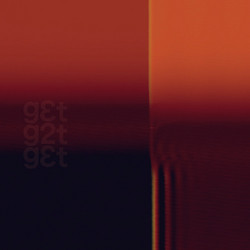
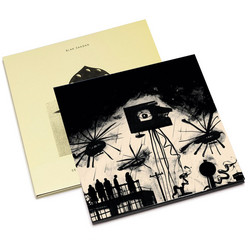
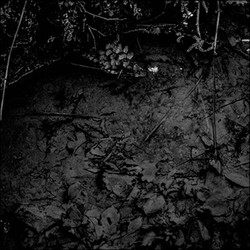
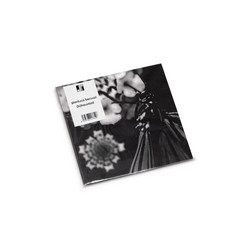
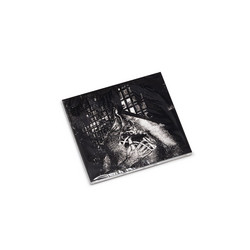
So, Nico's memorable songs transmute into dry avant-folk sound streams, endowed with a less lyrical but even more nocturnal and chilling mood than the original versions. The end, evoked by the title, is now an invisible apocalypse that takes place essentially within each of us, in the private tragedy of everyday life. In addition to the valuable vocal contribution in two songs by Sara Cappai (Diverting Duo, Ramplingg), the artwork contributes significantly to the work, with the shots by Steve's Shot and the graphics by Marco Formaioni - Studiografico M, historical collaborator of Becuzzi.
That undertaken with "TheenD" is certainly an ambitious and demanding operation, not without some business risk. Becuzzi declares in this regard: "In the world of art no one thinks that a subject such as crucifixion cannot be faced only because many great artists of the past have tried it, it is the practice, while if we talk about popular music some consider certain untouchable artists-works, under penalty of heresy. These positions depend on an unacceptable sentimentalist mythology that implicitly disqualifies popular music compared to the other arts. Re-reading from a personal perspective a work of the past is by no means sacrilegious and does not take anything that work, on the contrary, evidently declares that it is still alive and generative."

![Voices [for solo voice]](https://cdn.soundohm.com/data/products/2026-01/Becuzzi_Voices_CD_01-jpg.jpg.250.jpg)
![The Bunker Years [2006-2014]](https://cdn.soundohm.com/data/products/2025-05/R-14433460-1574443044-2868-jpeg.jpeg.250.jpg)
![[In]visible Fields](https://cdn.soundohm.com/data/products/2025-04/R-2802921-1301727390-jpeg.jpeg.250.jpg)

![[23] Re-Edit](https://cdn.soundohm.com/data/products/2026-07/Ciullini_23ReEdit_CD_01-jpg.jpg.250.jpg)