Occam Ocean 1-4
The first four volumes of Éliane Radigue's Occam Ocean on five CDs: solos, chamber pieces and orchestra, all shaped through oral transmission around images of water. Bundle of four Shiiin releases.
Occam Ocean Vol. 1
First instalment of Éliane Radigue's Occam Ocean on two CDs: five solo, duo and trio pieces for harp, viola, birbyné and bass clarinet with Rhodri Davies, Julia Eckhardt and Carol Robinson. With a 40-page booklet.
Occam Ocean Vol. 2
Second instalment of Éliane Radigue's Occam Ocean, a long suite for the 30-piece ONCEIM orchestra conducted by Frédéric Blondy: accordion, guitars, clarinets, saxophones, strings and brass merged into one slowly breathing tone.
Occam Ocean Vol. 3
Éliane Radigue's Occam Ocean 3: three pieces for viola, violin and cello with Julia Eckhardt, Silvia Tarozzi and Deborah Walker, recorded in 2019 in an abbey near Bologna. Music born of oral transmission and water images.
Occam Ocean Vol. 4
Fourth chapter of Éliane Radigue's Occam Ocean: three long pieces for alto saxophone, voice, treble viol, birbyné and bass clarinet, shaped with Bertrand Gauguet, Yannick Guédon and Carol Robinson through oral transmission.
The Golden Mean
Charlemagne Palestine live at the Sorbonne chapel in 1979, playing two Bösendorfer Imperial pianos: forty minutes of slowly accumulating intervals and ringing overtones. Hand-made CD in a velvet box designed by Palestine.
Naldjorlak I, II, III
Éliane Radigue's complete Naldjorlak trilogy (2004-2009): I for cello (Charles Curtis), II for two basset horns (Carol Robinson, Bruno Martinez), III for all three. Recorded in Paris in 2011 by Daniel Deshays. 3CD.
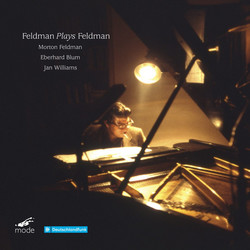
Feldman Edition 15: Morton Feldman Plays Feldman
Morton Feldman plays piano in a 1978 Deutschlandfunk concert recorded in Cologne, with flutist Eberhard Blum and percussionist Jan Williams: Why Patterns?, Extensions 3, Intermission 5 and The King of Denmark.
Pietra e Oggetto
A sparse and subtle jungle comprises the pieces that make up "Pietra e Oggetto". It is subtle, as such it remains in the memory. Thanks to the device of silence, which is like the air in between things, it allows time for what we have heard to imprint on our acoustic sketchpad. Like closing your eyes to preserve a memory and then moving on to the next. We feel a certain privilege in listening to these undecidable environments; these composite and hybrid objects filled with synthetic biodiversity…
Postal Pieces 1, 2
Both volumes of James Tenney's Postal Pieces, eleven short compositions written on postcards between 1965 and 1971 and mailed to friends including Pauline Oliveros, La Monte Young, Harold Budd and Max Neuhaus.
Postal Pieces 2
Blume returns to James Tenney's "Postal Pieces" with a second volume: three "Swell Pieces" and "Koan", written for Alison Knowles, Pauline Oliveros, La Monte Young and Malcolm Goldstein, on vinyl for the first time from one of the key suites of 20th Century avant-garde music.
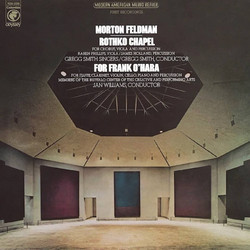
Rothko Chapel / For Frank O'Hara
Morton Feldman’s Rothko Chapel is a hushed yet monumental soundscape that resonates with the spiritual austerity of Mark Rothko’s paintings. Combining solo viola, voices, celesta, and percussion, the LP explores silence and timbre with a reverence that transforms listening into a meditative experience, while the composition For Frank O'Hara offers a tender lyrical counterpoint to its profound stillness.
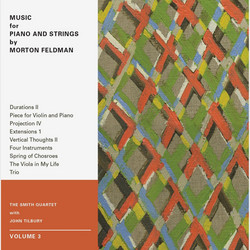
Music for Piano and Strings by Morton Feldman. Volume 3
Morton Feldman's Trio (1980) and eight shorter works for piano and strings (1950-1978), played by John Tilbury and members of The Smith Quartet live at the Huddersfield Contemporary Music Festival in 2006, issued on audio-only DVD.
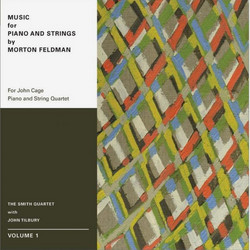
Music for Piano and Strings by Morton Feldman. Volume 1
Morton Feldman's For John Cage (1982) and Piano and String Quartet (1985), played by John Tilbury and The Smith Quartet live at the Huddersfield Contemporary Music Festival in 2006, issued on audio-only DVD because of their length.
Music for Piano and Strings by Morton Feldman. Volume 2
Morton Feldman's Patterns in a Chromatic Field (1981) and Piano, Violin, Viola, Cello (1987), played by John Tilbury with members of The Smith Quartet live at the 2006 Huddersfield Contemporary Music Festival, issued on DVD because of their length.

The Winds Rise in The North
Composer Harley Gaber wrote this piece for strings as an emotional examination of the questions posed by Taoist philosopher Chuang Tzu, here performed by a quintet including violinist Malcolm Goldstein
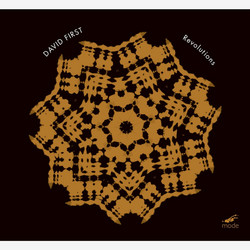
Revolutions
A long-form drone piece by David First built on the 16th to 32nd harmonics of G, performed by the twelve-member ensemble The Western Enisphere, with liner notes by Sarah Hennies.
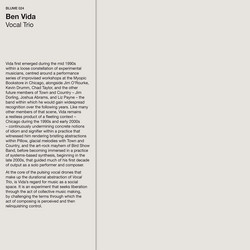
Vocal Trio
Marking its first decade of activity, Blume returns with the composer Ben Vida’s “Vocal Trio”. An intoxicatingly beautiful, groundbreaking work of compositional conceptualism - combining the ideas of systems based synthesis with real-time vocal collaboration - the album represents a striking step forward for one of the most ambitious and outstanding sonic artists working in the United States today. Mastered by Stephan Mathieu.
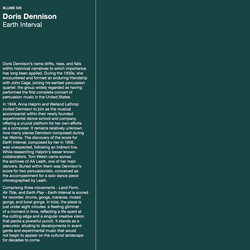
Earth Interval
Lucky restock, last (few) copies around ** 300 copies. 140gr Audiophile pressing. Including printed inner sleeve housing a Nagaoka anti-static record sleeve, plus an original insert that functions as Obi. Comes with a large Photographic booklet including extensive liner notes, rare archival photographs, biographical essays on composer Doris Dennison and dancer AA Leath, and historical documentation of this pioneering 1956 percussion work* The discovery of Doris Dennison's score represents a genu…
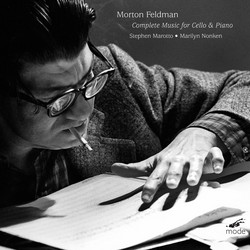
Feldman Edition 14: Complete Music for Cello & Piano
The complete music for cello and piano by Morton Feldman, played by cellist Stephen Marotto and pianist Marilyn Nonken, including unpublished pieces, a first recording of the 1946 Sonatina and the 89-minute Patterns in a Chromatic Field (1981).
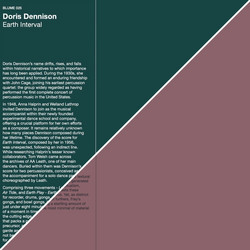
Earth Interval + Extended Circular Music (2LP Bundle)
This bundle includes the latest Blume releases, two groundbreaking archival discoveries that illuminate the hidden connections between American experimental music's founding generation and contemporary European avant-garde. Doris Dennison's Earth Interval (1956) emerges from seven decades of obscurity - a pioneering percussion composition by John Cage's forgotten collaborator, brilliantly realized by Third Coast Percussion.
Swiss composer Jürg Frey's first LP presents his crystalline Wandelweise…

Extended Circular Music
Blume presents the first ever vinyl release of Swiss composer Jürg Frey's "Extended Circular Music", offering a unique perspective on composition, sound, landscape, and circular music from one of the most distinctive voices in contemporary avant-garde composition.
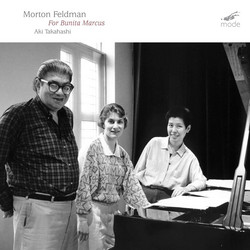
For Bunita Marcus
Morton Feldman's For Bunita Marcus (1985), an hour-long solo piano work, played by Aki Takahashi, for whom Feldman wrote all his piano music after Triadic Memories.
Sold Out
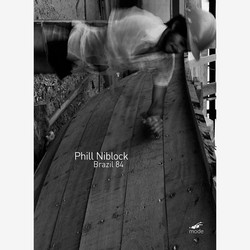
Brazil 84
Phill Niblock's 16mm film Brazil 84, from his series The Movement of People Working, shot along the Brazilian coast in 1984, with his music as soundtrack in stereo and surround: Three Orchids and Two by Tom. 77 minutes.
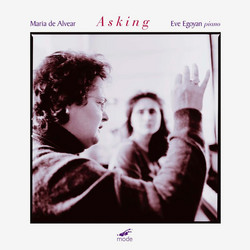
Asking
First recording of Maria de Alvear's Asking (2001), a 53-minute open-structure work for solo piano composed for and performed by Eve Egoyan.
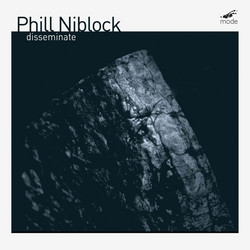
Disseminate
Three 22-minute drone works by Phill Niblock: Disseminate Ostrava for orchestra, Kontradictionaries for the Kontra-Trio of contrabass flute, saxophone and tuba, and Disseminate Q-O2 for the Q-O2 Ensemble.
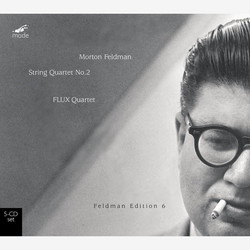
String quartet N°2
Morton Feldman's String Quartet No. 2, a continuous work of more than six hours, played by the Flux Quartet, in a deluxe DVD-audio edition with liner notes by Christian Wolff and Flux founder Tom Chiu.
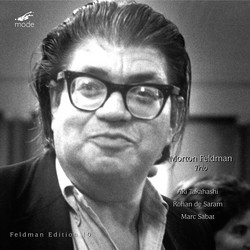
Trio
Morton Feldman's Trio for violin, cello and piano, lasting one hour, 45 minutes, in a recording with Aki Takahashi, Marc Sabat and Rohan de Saram, two of whom worked closely with the composer.
Sold Out

Shade / Gradient
**425 copies, 3-color letterpressed jacket with large 20-page booklet containing the full score and a lengthy interview with the composer** Catherine Lamb’s work is characterized by an insistence on what she calls the “interaction of tone”. Precisely tuned intervals, played slowly at subtle volumes, blend and generate a host of difference and combination tones, phasing, beating and aural illusions. Her ensemble and orchestral compositions have been performed in grand halls and d.i.y. spaces alik…
Four Full Flutes
** Edition of 300. Deluxe wooden box with velvet lining. Double LP on red vinyl, audiophile pressing, housed in Nagaoka anti-static record sleeves. Also includes an original LP-sized extensive booklet and a 60x90cm iconic poster designed by Bruno Stucchi/Dinamomilano ** Joining their broad efforts in building networks of context and understanding, spanning historical and contemporary territories of adventurous sound, Blume Editions is thrilled to announce the long-awaited first-time vinyl pressi…
Sold Out
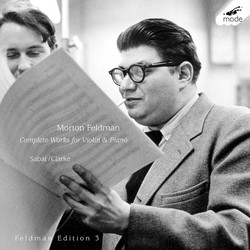
Complete Music For Violin & Piano
Morton Feldman's complete music for violin and piano, from Piece for Violin and Piano (1950) to For John Cage (1982), which spans both discs, played by Marc Sabat and Stephen Clarke.
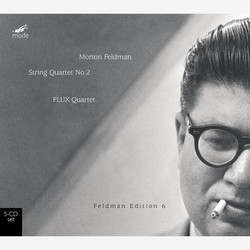
String Quartet No. 2
Morton Feldman's String Quartet No. 2, a work of more than six hours, played by the FLUX Quartet on a deluxe five-CD box with liner notes by Christian Wolff and FLUX founder Tom Chiu.
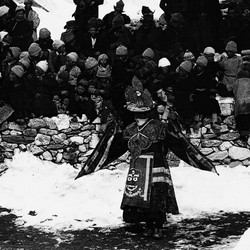
Anabasi
* Edition of 200 * In what might appear to be a paradox of logic, much of the history of avant-garde music - from Eric Satie, John Cage, and Morton Feldman, through the minimalists, post-minimalists, and beyond - has presented new forms radicalism through remarkable, self-imposed constraint. Sometimes structural, others tonal, temporal, or a combination of any of the three, these limitations and focus not only place demands of focus and attentiveness on the listeners, drawing the ear toward subt…
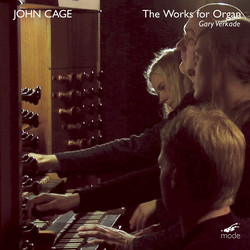
The Works for Organ
First complete recording of John Cage's works for organ, played by Gary Verkade on the organ of Gammelstad Church, Sweden: Some of 'The Harmony of Maine', Souvenir, ASLSP and Organ2/ASLSP, with 4'33'' on the DVD only.
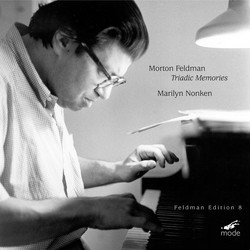
Triadic Memories
Marilyn Nonken plays Morton Feldman's Triadic Memories, a single-movement solo piano work of almost 90 minutes, recorded in 2003 and available on two CDs and on DVD-Audio.
Sold Out
Schraffur for gong solo
Fritz Hauser scrapes a single small gong for almost an hour, from the edge of silence to a dense, shifting cloud of overtones. Solo version of Schraffur, recorded in Piedmont in 2011 and mixed by Hauser himself.
Postal Pieces
Marking its first decade of activity, Blume returns with the first ever vinyl release to attend to the seminal American composer James Tenney’s “Postal Pieces”, among the most important suites of 20th Century avant-garde composition.
Sold Out
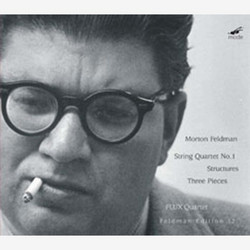
String Quartet No. 1
Morton Feldman's String Quartet No. 1 in the longest recorded performance, with Structures and Three Pieces for String Quartet, played by the Flux Quartet. Two CDs plus a bonus DVD of the uninterrupted 90-minute audio.
Simmetrie di Ritorno
Six compositions for chamber ensembles performed the Ensemble 2e2m by Giuliano D’Angiolini, ethnomusicologist and composer who "is a positively unique figure in contemporary music. His profound, well-conceived and stubborn take on music has led him to what he calls »impersonal« music — music that has fully abandoned the idea of development or form. Through successive states of presentation, which aim to elucidate, d’Angiolini wanted to leave place in sound so that music could become less volunt…