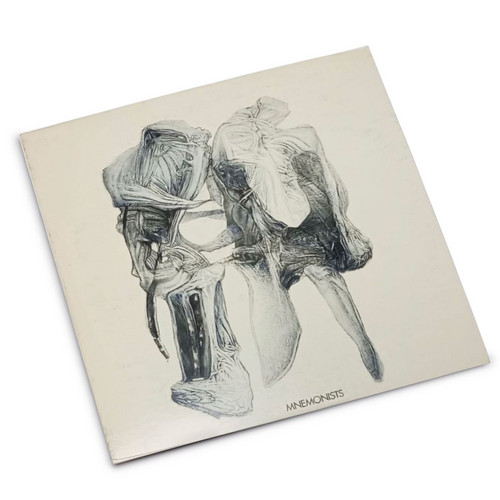
Horde (LP)
1984 re-issue on Recommended Records of the superb third album by the American audio-visual project, with fantastic electro-acoustic music with massive studio processing and a marvellous portfolio of images to accompany it, originally self-released on Dys in 1981. One of the most beautifully produced album of that era. With portfolio.
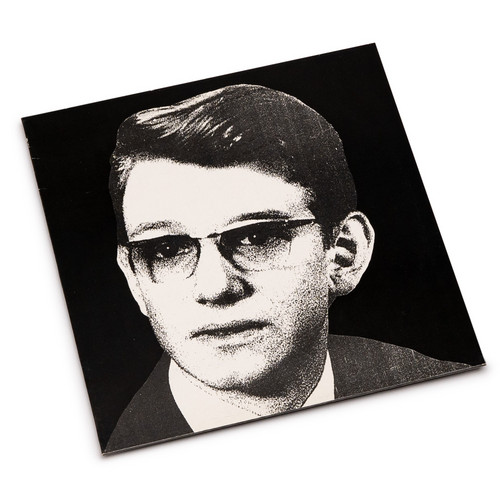
E (LP)
1988 album by the great and uncompromising electronic music experimenter in collaboration with his trusty producer partly showing his gentler side, released by HNAS' Dom Records.
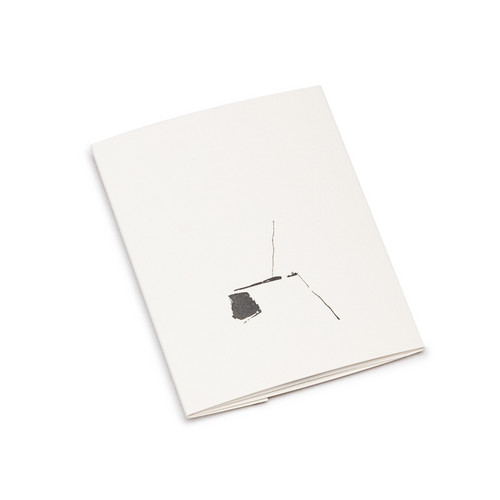
fold/interval
Tip! *300 copies limited edition* fold/interval is an audiovisual project and publishing and curatorial platform founded by Giuseppe Ielasi, Fabio Perletta and Giulia Bruno. This is their first release. Thirty minutes of guitar and electronics duos with a 12-page photo booklet and a letterpress sleeve.
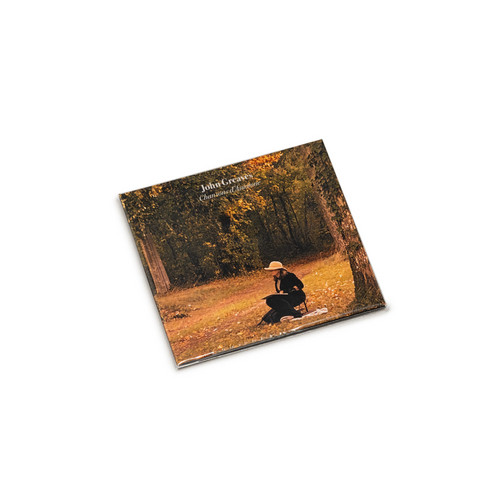
Chansons D'automne
This intimate trio is the perfect vehicle for songs composed by John Greaves in English and in French- poems by by Verlaine, Apollinaire and more set to music by John in a powerful and very personal style, far from the tradition of French “chansonniers” but just as endearing. Elegant music to match the exigencies of the lyrics.
It consists of 15 tracks beautifully composed and arranged by John who articulates a piano that is sometimes melancholic and sometimes rock. His inimitable sense of poetr…
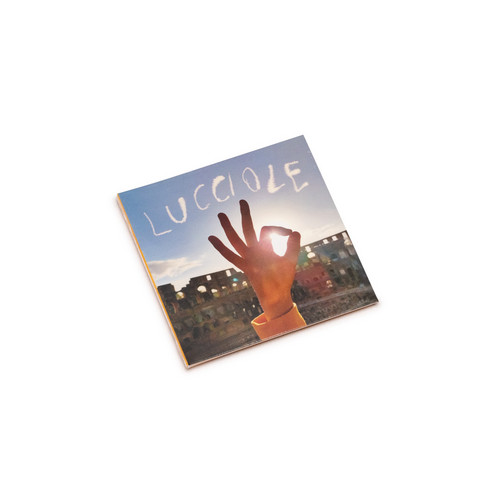
Lucciole
Lucciole is Silvia Tarozzi’s luminous follow-up to the intimate reflections of Mi specchio e rifletto and the deeply rooted folk dialogues of Canti di guerra, di lavoro e d’amore with Deborah Walker. Here, Tarozzi draws together voices, memories, and musical lineages to create an album where avant-garde composition, personal narrative, and collective resonance exchange freely. The album opens with a radiant brass ensemble—chosen for its popular, celebratory, spiritual sound—and closes with the P…
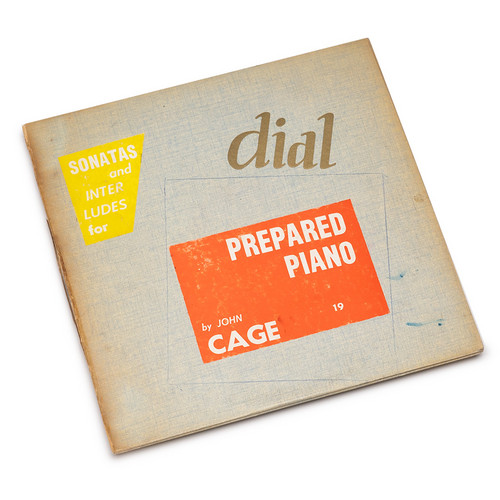
Sonatas And Interludes For Prepared Piano (2LP)
Cage's very rare first album of his landmark 1946-48 compositions performed by Maro Ajemian, released as a double LP set on Dial Records in 1951, it can't get more seminal than this. An essential piece of history in embossed heavy cardboard gatefold sleeve with stickers.
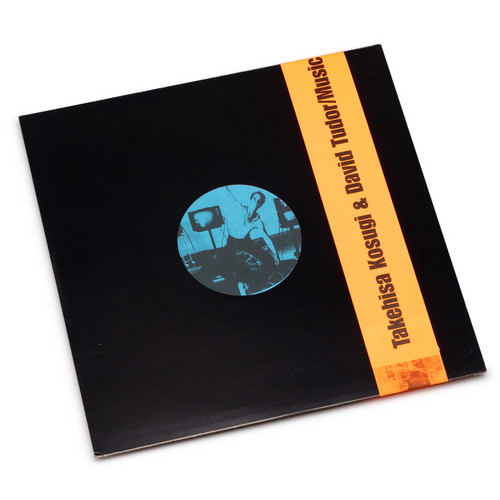
Music For Merce Cunningham / Dialects / Untitled (LP)
Rare 1998 red vinyl LP on Rotating Arts Press in a limited edition of 200 numbered copies with an undated recording of a satellite broadcast of the electronic environment for a live event by Merce Cunningham, plus two 1988 live radio recording.
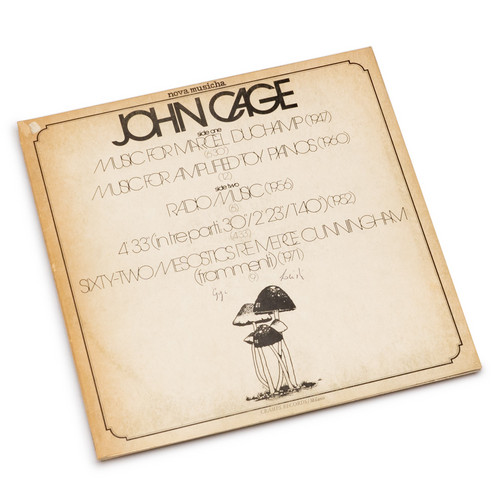
John Cage (LP)
The first album on Cramps' superlative "Nova musicha" experimental music series released in 1974, presenting pieces for piano, voice and radio noises spanning from 1947 to 1971, performed by an all-star cast including Walter Marchetti, Demetrio Stratos, Juan Hidalgo and Gianni-Emilio Simonetti.
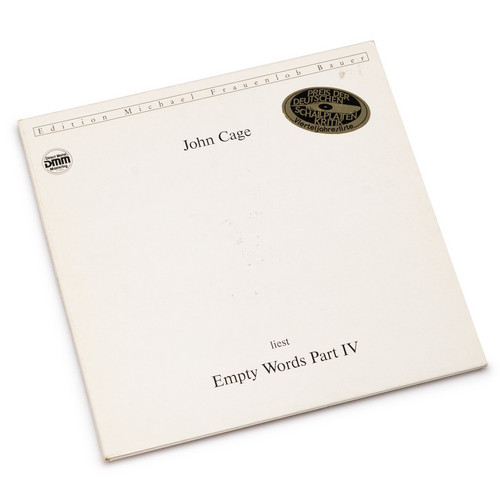
Empty Words Part IV (2LP)
Rare 1987 double LP on Edition Michael Frauenlob Bauer with the composer himself performing his 1970's text-composition recorded live in 1984. Truly extreme stuff.
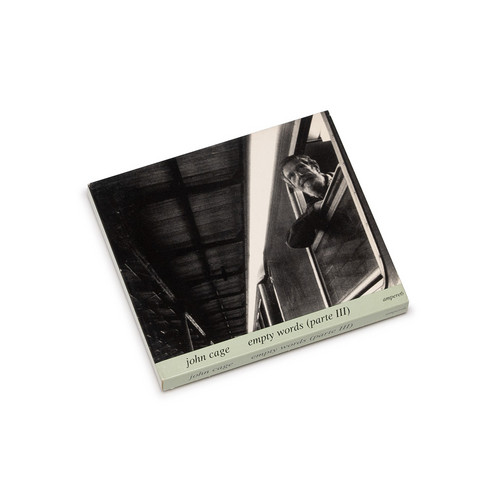
Empty Words - Parte III (2CD)
2011 re-issue on Ampersand of the 1990 2CD set with the legendary extreme live vocal performance by the composer in Milano in 1977, which caused quite a riot. With slipcase.
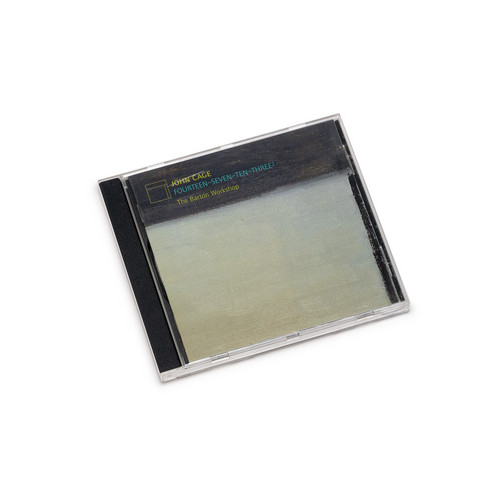
Fourteen-Seven-Ten-Three²
Rare 2006 CD on Megadisc Classics of late compositions for ensemble from the late 1980's / early 90's, performed by tJames Fulkerson's Barton Workshop.
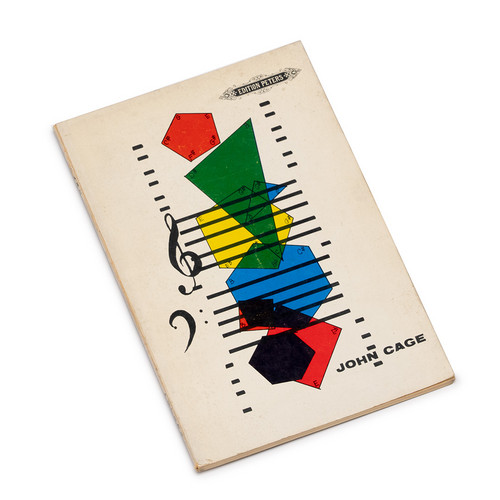
John Cage (Book)
Rare first catalogue of Cage’s works published by Peters & Henman Press in 1962.
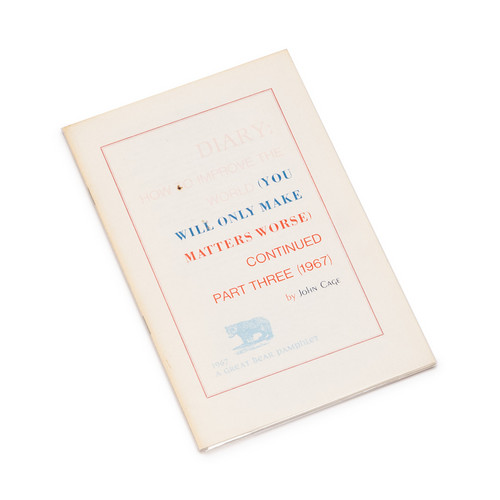
Diary: How To Improve the World (You Will Only Make Matters Worse) Continued Part Three (book)
Rare first edition of Cage's 1967 artist book with multi-colored text, published by Something Else Press in 1967.
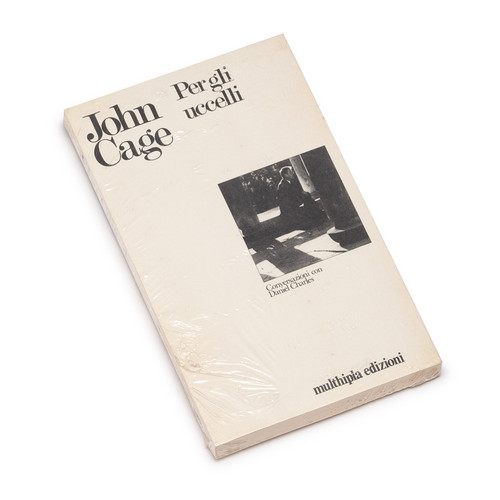
Per gli Uccelli (book)
Italian edition of the 1976 book of conversations with Daniel Charles, translated by Walter Marchetti and published by Multhipla in 1977.
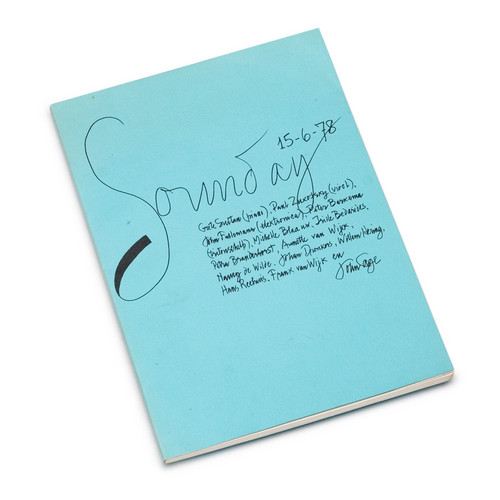
Sounday 15-6-78 (book)
Rare fully illustrated hommage to the composer published as the program for the 1978 première and recording of Sounday by KRO Radio in Holland, with texts by Pierre Boulez, Merce Cunningham, David Tudor, Christian Wolff, etc..
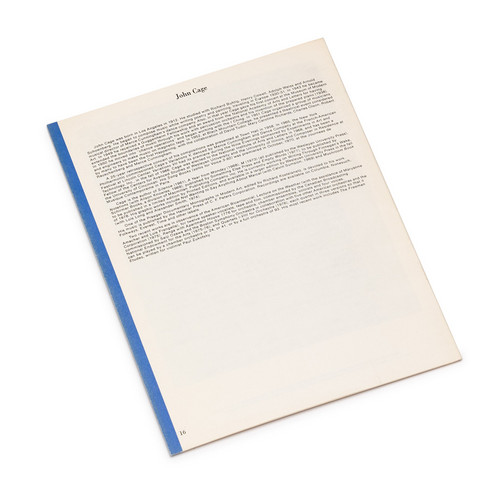
View Vol.I No.1 April, 1978 - John Cage (magazine)
First issue of American art/music magazine published by Crown Point Press in 1978 completely devoted to John Cage.
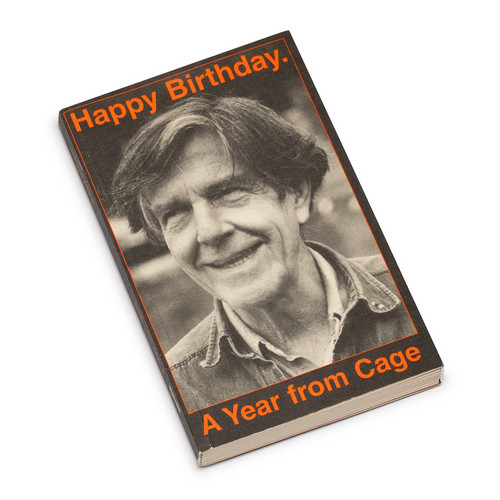
Happy Birthday, a Year from Cage (book)
Thick program for the 2002 series of concerts and events around John Cage organized in Milano for the composer’s 90th birthday.
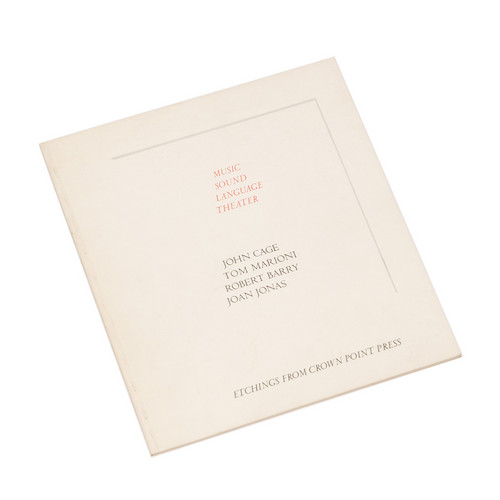
Music Sound Language Theater (book)
Illustrated exhibition catalogue published by Crown Point Press in 1980 with several essays on Cage, Marioni, Barry and Jonas.
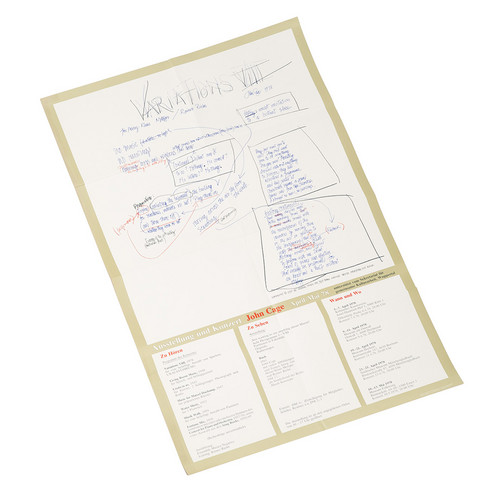
Ausstellung un konzert John Cage April/Mai 1978 (poster)
Rare poster for a series of exhibitions and concerts by Cage through Germany in 1978, ilustrated with the score of Variations VIII.
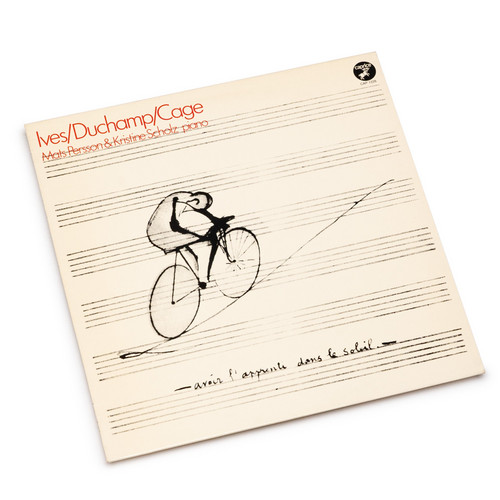
Ives/Duchamp/Cage
Historical avant-garde pieces for two pianos (prepared, quarter-tone or with tape) spanning from 1913 to 1944, performed by Kristine Schol and Mats Persson and released on Caprice in 1982 and never re-issued on either LP or CD.