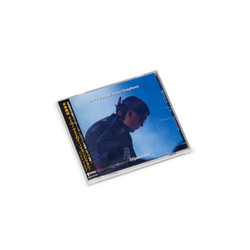
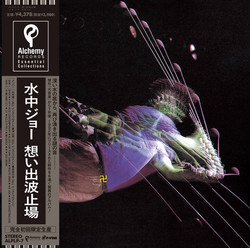
Ninety-nine tracks in thirty minutes - the physical limit of what a compact disc can hold. Alternate Flash Heads, the second solo album by the saxophonist Ryoko Ono, issued in 2015 by Alchemy Records and produced by Jojo Hiroshige himself, is one of the great conceptual gambits of recent Japanese music: a single composition shattered into 99 palindrome-titled fragments, designed to be shuffled - so that no listener ever hears the same album twice.
Ono, born in Sapporo in 1975 and long based in Nagoya, is among the most formidable reed players of the Japanese underground. She is best known as one half of Sax Ruins, her volcanic duo with Tatsuya Yoshida of Ruins, and for her work with Acid Mothers Temple & The Melting Paraiso U.F.O. - a player equally at home in blues, free jazz, prog, and noise, armed with circular breathing, dense multiphonics, and a self-built MIDI foot-trigger system. Alternate Flash Heads distills all of it into miniature. Working over two and a half years, Ono multitracked her alto saxophone into a private archive of more than 2,000 fragments, recording and mixing everything herself, then paring the mass down to 99 - each joined to the thunderous drumming of Talow The Tornado, each bearing a three-letter palindrome for a title: pAq, wHw, YoY, bMd.
The music arrives in flashes, exactly as the title promises. Some tracks last mere seconds - a squalling burst of alto stacked three and four layers deep, a drum figure that detonates and vanishes - while others stretch just long enough to reveal the compositional hand beneath the chaos. Play the disc straight through and it reads as a single breathless piece in 99 sections, precise and ferocious; set it to shuffle, as Ono explicitly invites, and the album reassembles itself into a new architecture with every listen, playback becoming a form of composition in the listener's hands. The nearest precedent is Otomo Yoshihide's The Night Before the Death of the Sampling Virus - which managed a mere 77 tracks - though where Otomo worked in noise, Ono keeps one foot firmly in jazz: the phrasing swings even as it burns.
An album that dismantles the ready-made image of the saxophone record, and among the most singular entries in the Alchemy catalog - the label's ear for extremity turned, for once, toward rigor and play in equal measure. Pressed on CD in a jewel case with obi, it remains scarce outside Japan. A brilliant object, endlessly re-listenable in the most literal sense.