Jon HassellFeaturing: Brian Eno
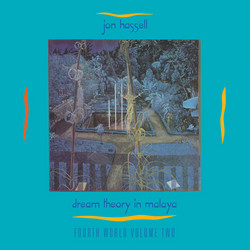
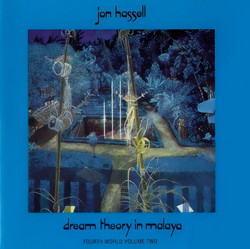
Dream Theory In Malaya (LP)
condition (record/cover): NM / VG+ (light ring wear)
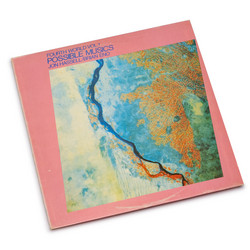
The second installment of Jon Hassell's Fourth World project, Dream Theory In Malaya (1981), takes its title from anthropologist Kilton Stewart's 1951 essay on the dream-life of the Senoi people of central Malaysia. Stewart's premise (that the Senoi treated their dreams as a kind of social currency, discussing and adjusting them through collective conversation) gave Hassell the conceptual frame for an album about consciousness, transmission and what he called "memory of the future". Brian Eno appears again, but as one collaborator among several; this is more fully Hassell's record than Possible Musics was.
"Chor Moiré" opens with a treated trumpet line that loops back on itself like a half-remembered ritual. "Courage" sets percussion patterns against Hassell's microtonal flute. "Datu Bintung at Jelong" works a Malaysian rhythmic structure through layers of digital delay. The closing "Malay" is built almost entirely from Hassell's voice and trumpet, with field-recorded water sounds underneath, a piece of pure listening. Throughout, Eno, Aiyb Dieng, Michael Brook and others provide instrumental support, but the architecture is unmistakably Hassell's.
The original vintage Editions EG pressing on EGED 13. Dream Theory In Malaya extends the Fourth World vocabulary deeper into Hassell's specific anthropological and spiritual interests, and remains the clearest demonstration of why his work would shortly influence Talk Talk's Spirit Of Eden sessions, David Sylvian's Brilliant Trees and Gone To Earth, and an entire generation of post-rock and ambient electronic music.