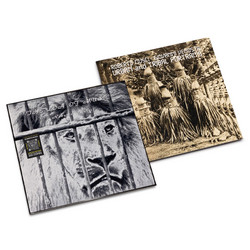
condition (record/cover): NM / VG+ (light ring wear)
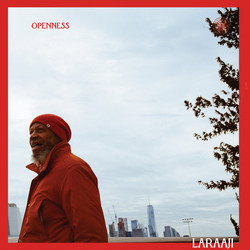
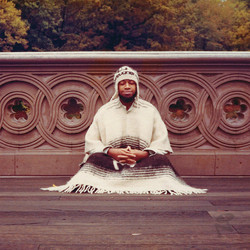
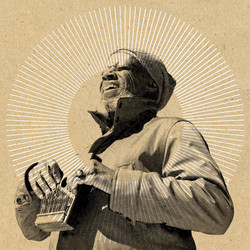
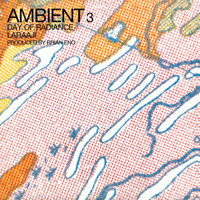
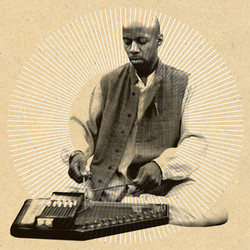
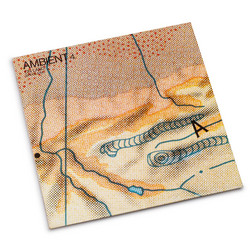
The third installment in Brian Eno's Ambient series and the first the label issued by an artist Eno had personally discovered busking. The story has become canonical: in early 1979, walking through Washington Square Park in Greenwich Village, Eno encountered Larry Gordon (later Laraaji) playing an electric zither for spare change. Eno left a note in the open instrument case proposing a recording session. The result, Ambient 3: Day Of Radiance (1980), is fifteen of the most concentrated minutes of zither-and-hammered-dulcimer playing ever committed to studio tape, processed and shaped by Eno into the third entry in his ambient programme.
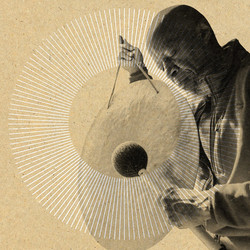
Side A contains the two "Dance" pieces, fast rhythmic workouts where Laraaji strikes the zither with hammers, producing cascading patterns over rolling drone beds. Side B contains the slower "Meditation" pieces, the same instruments allowed to ring out into sustained harmonic spaces. Eno's production is minimal: light delay, occasional reverb, no overdubbing or melodic intervention. Laraaji plays everything. The cumulative effect is unlike any other entry in the Ambient series: more rhythmic than The Plateaux Of Mirror, more melodic than Music For Airports, more meditative than what On Land would shortly become.
The original vintage Editions EG pressing on EGAMB 003, distributed by Polydor across Europe. Day Of Radiance introduced Laraaji (who would go on to record a long catalog of solo and collaborative work through the following decades) to the wider listening public and remains one of the most distinctive entries in the Ambient series. The record where Eno's ambient project briefly opened onto another musical universe entirely.