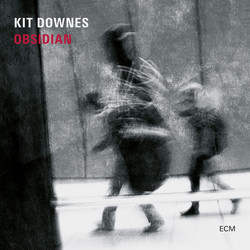
Dreamlife of Debris is the second ECM album by British keyboardist Kit Downes, and it carries forward the work begun on Obsidian in 2018. That record was almost entirely a solo church organ album. Here Downes sets the organ in a wider frame, brings his first instrument, the piano, into the writing, and lets four improvisers move in and out of the music in changing combinations.
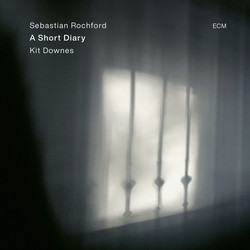
Most of the players are long-standing partners. Saxophonist Tom Challenger had kept an organ and sax duo with Downes for eight years. Cellist Lucy Railton shared the duo Tricko with him, and drummer Sebastian Rochford knew him from the band Acoustic Ladyland. Norwegian guitarist Stian Westerhus was a first encounter. The sessions took place in November 2018 at St Paul's Hall, a converted church at the University of Huddersfield, and at the 13th-century church of St John the Baptist in Snape, Suffolk. The musicians never played together as one ensemble. They meet, as Downes puts it, "in a space with no singular character", and the dreamlike ambience was built through overdubs and collage. Sun Chung produced, with Alex Bonney as engineer.
Downes wrote six of the eight pieces. Sculptor opens with bright piano and tenor saxophone that slowly dissolve into organ drones. Bodes, the longest track at over twelve minutes, lets Westerhus's guitar bubble up from inside the texture. M7, by bassist Ruth Goller, is played on solo organ and points straight back to Obsidian. The closing Blackeye, co-written with Challenger, moves from a quiet trio with Railton to a driving section where Rochford's toms push against the organ.
The press response was strong. In BBC Music Magazine, which gave it five stars, Garry Booth described "a quintet work of other-worldly beauty" built largely on improvisation around written themes. DownBeat made it an Editor's Pick, and Dave Cantor called Blackeye "a deeply affecting sonic turn". Ian Mann of The Jazz Mann heard a hint of Philip Glass in the organ arpeggios of Circinus, under the long lines of sax and cello.
This is the CD edition, ECM 2632, first released on 25 October 2019, with a liner essay by Steve Lake.