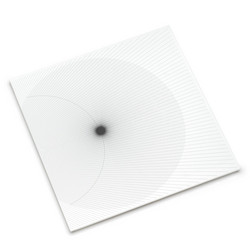
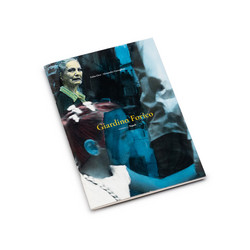
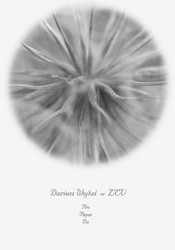
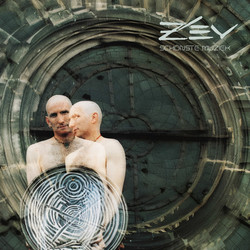
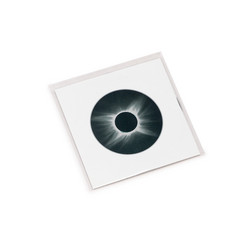
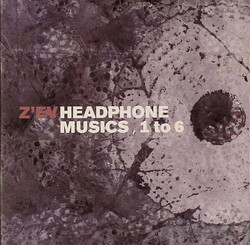
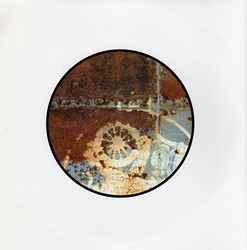
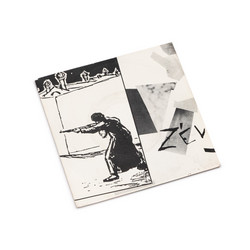
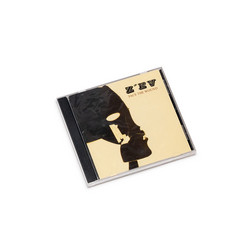
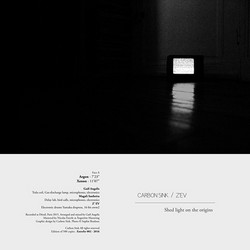
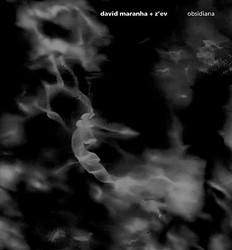
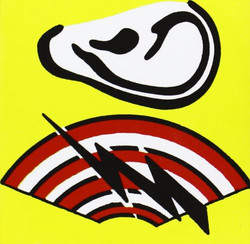
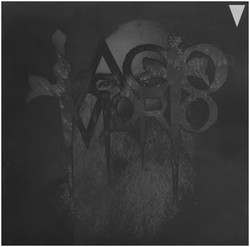
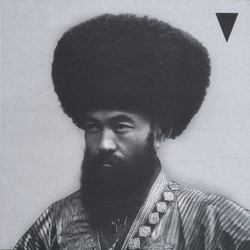
A singular document. EyEar presents, for the first time, the visual dimension of Z'EV's practice - a body of work that had, until this release, remained inseparable from the live event, resistant to any fixed form.
Born Stefan Joel Weisser in Los Angeles in 1951, Z'EV stands as one of the most uncompromising figures in the history of experimental and industrial music. From his first solo percussion performances in San Francisco in the late 1970s - deploying self-constructed instruments assembled from stainless steel, titanium, and PVC - he developed what he called a "wild-style": a physical, shamanistic engagement with sound as acoustic phenomenon rather than musical expression. His early UK and European tours in 1980-81, opening for Bauhaus, introduced metal-based percussion to audiences who had never encountered anything like it. The lineage he helped establish - Einstürzende Neubauten, Test Department - passed through him first. Across four decades, his collaborators ranged from John Cage and Glenn Branca to The Hafler Trio, Psychic TV, and Merzbow, while his solo discography - beginning with Elemental Music in 1982 - mapped an increasingly refined engagement with polyrhythm, resonance, and what he termed "spatial poetics".
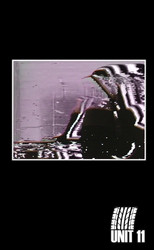
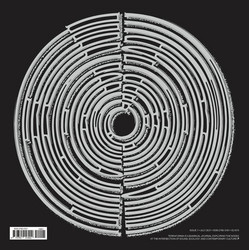
What EyEar captures is another dimension of that same investigation. Using percussion and rhythm as a generator of visual pattern - altering waveforms, creating altered audiovisual material in real time - Z'EV's live events had long functioned as total environments, as much optical as acoustic. This DVD documents that process: primitive industrial psychedelia rendered visible, the vibrating body of sound made image. The result sits closer to structural film and early video art than to concert documentation - less a record of performance than a work in its own right, inseparable from the logic of its making.
The connection to the Italian imprint Von - also responsible for Kirkegaard's 40 Days Of Silence and Norment's The Haunted - places EyEar within a precise curatorial lineage: sound and visual art where the boundary between the two dissolves entirely. For a practice as committed to the non-representational as Z'EV's, it is perhaps the only adequate format. Issued as VON 011.