Rumil Vildanov
Kino Variants 1967-1986 (2LP)
Continuing their longstanding explorations of unexpected and adventurous territories of sound, Von - the imprint run by filmmaker and sound artist Carlos Casas and cofounded with Nico Vascellari - is pleased to present Kino Variants 1967-1986, the first-ever collection to illuminate the vast body of work created by the Uzbek composer Rumil Vildanov during the second half of the 20th Century. Offering a rare glimpse of liberated creative spirit operating behind the Iron Curtain, this engrossing double LP - complete with printed inner sleeves and issued in highly limited edition of 300 copies on black vinyl - provides an unprecedented immersion into the work of one of the most celebrated composers from Uzbekistan, often described as the "Ennio Morricone of Central Asia". Comprising a startling range of electronic and electroacoustic experiments, evocative chamber works and orchestral works, and more discrete instrumental efforts - all created to accompany moving image - totaling an incredible 82 pieces in total, this remarkable sonic journey into Vildanov's inner world and towering talents, which have, until now, remained almost entirely unheard beyond the time and place within which he worked - contributes a significant historical counterpoint to standing perceptions connected to artistic expression under Soviet rule, placing the composer's engrossing contribution to post-war music within the broader context it deserves.
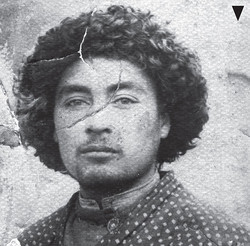
Rumil Vildanov was born into an intellectual family in Bishkek, Uzbekistan, in 1939. His musical education began early, eventually leading him to the Tashkent conservatory, where he studied composition. For the entirety of Vildanov's life, Uzbekistan made up an important part of the Soviet Union, representing one of its most diverse regions, being an ethnic and cultural melting pot at the axis between Europe, the Middle East, and Asia. While often subtle, all of these elements - working within a context of Soviet state control, and the influences of numerous cultural touchstones - offered a guiding undercurrent to the sprawling body of work that Vildanov produced between the early 1960s and his death in 1987. While he taught for most of his professional life - first at the conservatory between 1962 and 68, then at a prominent music school for children 1968 and 1981, before returning to the conservatory during the last years of his life - playing a significant role in shaping subsequent generations of Uzbek artists - his career as a composer was widely celebrated in his own time, winning him the Republican state prize for his sprawling body of chamber and symphonic works, as well for his efforts working in musical theatre, ballet, children's puppet theater, and eventually film. It was arguably in the latter form, that the composer found his greatest vehicle for expression. Beginning in 1964, when he was first asked by the director, Elyor Ishmuhamedov, to compose the music for one of his films, Vildanov became "obsessed with making music for cinema" and remained deeply connected to the field for the rest of his life - collaborating with prominent filmmakers, including Eldor Urazbaev, Ali Khamraev, and Shukhrat Abbasov - contributing to some of the most significant and highly regarded soundtrack works - acclaimed for their richness and diversity - of Soviet and Uzbek cinema during the second half of the 20th Century.
It is Vildanov's sonic contributions to film, around which Kino Variants 1967-1986 narrows its focus, illuminating the composer's striking range and diverse touchstones across its 82 pieces. Curated thematically rather than strictly chronologically - offering track information and pointing toward the associated film and scene of each in the album's liner notes - the collection begins with 29 Abstract Variations of various durations, rendered on a range of instruments - synthesizer, harp, harpsichord, and timpani, among numerous others - in solo and multi-instrumental combinations, utilizing both purely acoustic and electroacoustic approaches. Rather than simple fragments or short passages intended to add dramatic effect through their association with moving image, Vildanov's "abstractions" stand autonomously as impactful sonic miniatures, revealing particularly singular sensibilities for structure, attack, and space.
The second side of the collection offers an immersion into Vildanov's Orchestral Variations, which move between constrained and encompassing scales of instrumental combination. Traversing a remarkable range of sonic expressiveness and creative vision - continuously defying expectation, individually and collectively, as they unfold - these variations offer further illumination of the composer's talent and versatility. Retaining a strong sense of cohesive vision within their diversity, Vildanov elegantly moves between the use of avant-garde tonal dissonance and lush melodic sensibilities, becoming particularly striking in instances where the inner conversations and conjunctions are bent and twisted through the composer's striking combinations of synthesizers and orchestral instruments, having few parallels, before or since.
The second LP of Kino Variants 1967-1986 is dedicated to two thematic groupings, Rubab Variations and Titles Variations. The first stands among the most culturally revealing bodies of work in the collection; centering the focus upon Vildanov's compositions for the rubab, a lute-like stringed instrument played in parts of Central and South Asia, similar to the Indian Sarod, that has strong presence in Uzbekistan. The instrument's sound and cultural plurality presents a perfect mirror to the diversity and cultural multiplicity of the composer's home. Ranging from solo pieces, imbued with an aching sense of poetry, to more complex multi-instrumental arguments and various electronic interventions - each standing among the most authentic and distinct musical hybrids composed during the 20th Century - as the instrument's percussive tonality dances in space, Vildanov's Rubab Variations bend time and place, seeding experimentalism with the richness of ancient tradition.
Titles Variations, the collection's fourth and final side, comprises 19 pieces that expand and further illuminate the range of Vildanov's musical explorations, the majority of which date from the final decade of the composer's life. A fitting conclusion, distilling decades spent traversing the multifaceted possibilities of organized sound, as well as the radical possibilities activated through its combination with film, this grouping encompasses moving orchestral pieces, minimal gestures, meditative passages, and subtle sonic experiments, each packing a powerful punch - creatively as much as emotively - into the relatively discreet scale.
Offering a social, cultural, and historical revelation, casting light upon one of the most unique and overlooked composers working behind the Iron Curtain during the 1960s, '70s, and '80s, Rumil Vildanov's Kino Variants 1967-1986, issued by Von as a deluxe 2LP set in highly limited edition of 300 copies on black vinyl - complete with printed inner sleeves, providing extensive information on the 82 pieces comprised across its four sides - is nothing short of a towering accomplishment, immersing the ear in truly visionary sounds that upend longstanding perceptions of the nature of 20th Century sounds. Curated and researched by Carlos Casas and Saodat Ismailova, meticolous audio restoration and mastering by Andrea Marutti give these archival recordings the presence and clarity they deserve. Truly incredible and not to be missed.
Edition of 300
| A | Abstract Variants | ||
| B | Orchestral Variants | ||
| C | Rubab Variants | ||
| D | Titles Variants |
- Московский Камерный Хор
- Chorus (A1, A2, AA6, B1, B7)
- Румиль Вильданов
- Composed By
- С. Скрипка
- Conductor
- Симфонический Оркестр Госкино СССР
- Orchestra