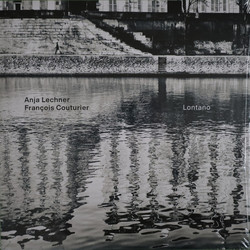
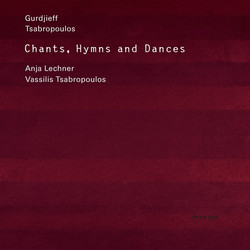
Melos continues the work that German cellist Anja Lechner and Greek pianist Vassilis Tsabropoulos began on Chants, Hymns and Dances in 2004. That album set cello and piano arrangements of G.I. Gurdjieff beside Tsabropoulos's own music, and it reached classical charts in several countries before the duo toured it widely. Here the balance shifts: Tsabropoulos wrote twelve of the fifteen pieces, a third musician joins, and improvisation gets more room.
Both players come from classical music, and both have long experience as improvisers, which shaped how they approached Gurdjieff in the first place. The newcomer is Italian drummer and percussionist U.T. Gandhi, who adds subtle shadings and pulsations without crowding the duo. The trio recorded in June 2007 at the Auditorio Radio Svizzera in Lugano, in collaboration with RSI Rete Due. Stefano Amerio was the engineer and Manfred Eicher produced. The three Gurdjieff pieces come from Thomas de Hartmann's piano transcriptions, newly arranged by Lechner and Tsabropoulos.
The Tsabropoulos pieces form an arc into which the Gurdjieff works are set at intervals: Tibetan Dance, Sayyid Dance and Reading from a Sacred Book. His writing refers to Byzantine hymns again and treats Greece as a doorway to the East, while the melodies open into modal improvisation. Gandhi plays on some pieces only, so cello and piano are often heard alone, as on the first album. Several short pieces, such as Reflections and Simplicity, last barely two minutes, while Vocalise and Evocation stretch past seven.
Ray Comiskey gave the album four stars in The Irish Times in October 2008. He wrote that Lechner, "a sublimely beautiful cellist, by now shares with the pianist a rapport that transcends intimacy". In the German magazine Jazzthing, Ssirus W. Pakzad heard an elegiac record in deep minor keys, noting that Gandhi's arrival brings a lighter, almost dancing element. Jazzthetik pointed to the way the trio holds melodic tension, with pianist and cellist trading the lead and Gandhi wisely holding back. Writing in Pianist, Jörg Konrad noted how Tsabropoulos weaves quotations from the European classical tradition together with Byzantine chants and dances.
CD edition, ECM 2048, first released in August 2008.