Selected Signs III-VIII is a six-CD anthology that Manfred Eicher and Steve Lake assembled for ECM: A Cultural Archaeology, the exhibition curated by Okwui Enwezor and Markus Müller at the Haus der Kunst in Munich from November 2012. Each disc was a listening programme for the show, and together they cross five decades of the catalogue, from new music to jazz, folk and film scores, in about seven hours.
The discs carry on the numbering of ECM's earlier Selected Signs samplers, a series that began in 1997, but here each disc was programmed as one continuous playlist. A note in the box states that the set is not the soundtrack of the exhibition but an extension of it and an alternative. Most of the music comes from ECM albums, from 1961 to 2012, with one track licensed from Harmonia Mundi. According to a review in Stereo, the first three discs lean towards composed music and the last three towards improvisation.
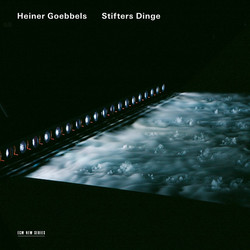
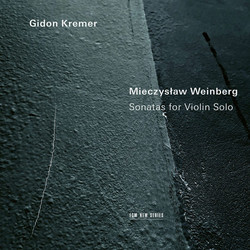
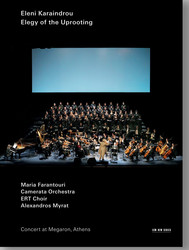
Disc III moves from Heiner Goebbels' Der Mann im Fahrstuhl to Steve Reich's Music for 18 Musicians, Arvo Pärt's Fratres with Gidon Kremer and Keith Jarrett, and György and Márta Kurtág at the piano. Disc V draws on Eleni Karaindrou's Concert in Athens and on Jon Balke's Siwan, while disc VI opens with Andrey Dergatchev's film music from The Return and runs into Nils Petter Molvær's Khmer. Disc VIII is the most jazz-centred, from Jimmy Giuffre's Jesus Maria of 1961 through John Surman and Barre Phillips to Lonely Woman played by Old and New Dreams, and it closes with Robin Williamson.
Reviewers took the box as a work of sequencing in its own right. In The Guardian John Fordham gave it five stars and wrote that the way the set was assembled "creates transporting new narratives" out of sequences never meant to coexist. Phil Johnson in The Independent on Sunday found it "austere even by the label's own standards, but no less beautiful." John Kelman, in All About Jazz, linked it directly to the exhibition's listening stations.
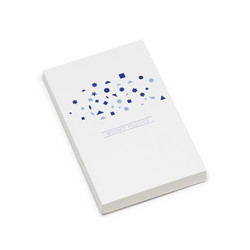
The set (ECM 2350-55) was released by ECM Records in June 2013, six CDs in a plain white box designed by Bernd Kuchenbeiser.