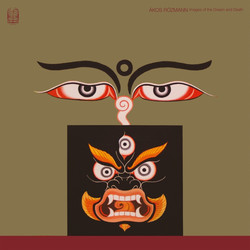
Akos Rozmann
Impulsioni
LabelFylkingen RecordsGenreElectronic
Out of stock
Tracked express shipping from Italy, no customs or import VAT in the EU. Shipping costs
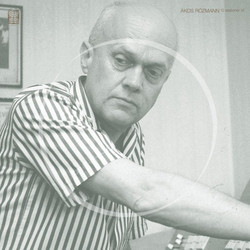
Ákos Rózmann was born in Budapest, in 1939, where he studied organ and composition at the Liszt Academy. From 1979 to 1974 he studied composition at the Royal College of Music in Stockholm. Since 1978 he has been organist at the catholic cathedral in Stockholm. Epithets which come to mind after listening to Rózmann´s music are "powerful", "raw", "monumental", "impassioned". He is a master of large forms. Exerpts from the booklet text (by Hans Gunnar Peterson): Impulsioni I, II, III (1973-74) ("Impulsioni" is the collective title of three works wich comprise the beginning of Rózmann´s work within the field of electroacoustic music.) (Seen as compositions, Rózmann himself sees "Impulsioni I-III" as the earliest, almost primitively simple results of a line of composition which nonetheless has kept it´s importance for him. "Impulsioni I" is a true start from scratch for him, with the low first tone followed by soft, silvery sounds. The second piece utilized a pulse generator, and the third a machine available at the Royal Conservatory called a "Synthi". During this period, the composer used only synthetic sounds.) (It was not until later that he turned to concrete sound samples, such as organ tones, voice and other material. Despite the simple background of "Impulsione I-III", it was here that Rózmann became convinced that electroacoustic music is the greatest expressive device of out time, an opinion which he has steadfastly held throughout the years.) De två, med tre instrument (Two, with Three Instruments) (1996-97) (The title, "Two, with Three Instruments" mixes matter-of-factness with imagination. What is meant by "Two"? The next part, "...with Three Instruments", is easier. The composition is built on samples from three instruments, with the composer´s own voice being a fourth source.) (Rózmann´s art moves between many forms of society and civilization. Gregorian chant is placed next to songs by Buddhist monks, children’s voices next to the laugh of someone who is probarly the Devil himself.)
Release notes
"Impulsion" composed 1973-74 at EMS and at the Kungliga Musikhögskolan i Stockholm (The Royal College of Music of Stockholm), Sweden. "De Två, Med Tre Instrument" composed 1996-97 at EMS. Comes in a digipak with a 16-page booklet.
| Impulsioni I, II, III | |||
| 1 | Impulsioni I | 2:46 | |
| 2 | Impulsioni II | 3:56 | |
| 3 | Impulsioni III (Basilica Di San Clemente) | 2:59 | |
| De Två, Med Tre Instrument | |||
| 4 | Inledning (Introduction) | 1:38 | |
| 5 | Nummer I | 9:26 | |
| 6 | Ritornell I | 1:05 | |
| 7 | Nummer II | 5:32 | |
| 8 | Ritornell II | 1:30 | |
| 9 | Nummer III | 5:57 | |
| 10 | Ritornell III | 2:05 | |
| 11 | Nummer IV | 32:06 | |
| 12 | Ritornell IV. Avslutning (Coda) | 1:20 | |
- Eva Jirner Lindström
- Artwork [Drawings]
- Akos Rozmann
- Composed By, Mastered By
- Mats Lindström
- Executive-Producer, Graphic Design
- Jonas Mattson
- Graphic Design
- Hans-Gunnar Peterson
- Liner Notes