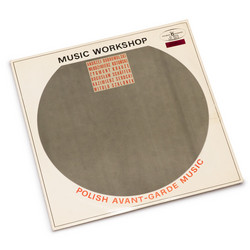
Krzysztof Penderecki, Grażyna Bacewicz, Artur Malawski
Tren Pamięci Ofiar Hiroszimy / Muzyka Na Smyczki Trąbki I Perkusję / Etiudy Symfoniczne (LP)
condition (records/cover): NM / VG+ (light wear)
Three generations, three positions. One of the most resonant single LPs in the Muza catalog, and the record that first brought Krzysztof Penderecki's Threnody to the Victims of Hiroshima to international attention.
The Threnody (1960) is nine and a half minutes for 52 string instruments and no conductor - the strings divided into individual parts, each player making sounds that had not previously been notated in any Western score: playing behind the bridge, striking the body of the instrument, producing tone clusters of maximum density. Penderecki was thirty-seven when he submitted it under a pseudonym to the Warsaw Autumn Young Composers' Competition, where it won all three prizes. He later retroactively dedicated it to the victims of Hiroshima - the title was originally just 8'37" - but the gesture was not opportunistic: the music's capacity for registering catastrophe at a physical level was already present before the dedication. It remains one of the most viscerally overwhelming short orchestral works of the twentieth century, and one of the most influential.
Grażyna Bacewicz's Music for Strings, Trumpets and Percussion (1958) represents the generation trained before the thaw: technically formidable, the language advanced but rooted in the neo-classical tradition, the formal architecture precise. Artur Malawski's Symphonic Études for Piano and Orchestra (1947) reaches further back still - Malawski was Penderecki's own teacher at the Kraków Academy, and this work belongs to a late Romantic idiom that makes the LP's arc from 1947 to 1960 a compressed history of Polish compositional language in its most transformative decade. Original Muza pressing, red label first pressing.