Tashi Wada
What Is Not Strange?
Tracked express shipping from Italy, no customs or import VAT in the EU. Shipping costs
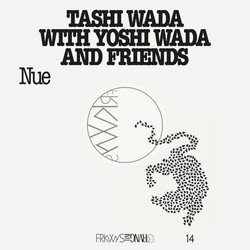
* CD edition * There are artist in our midst whose ethos stand as a beacon in the landscape of sound, reminding us, through their efforts, of the spirit that underscores experimental music and the avant-garde. The Los Angeles-based composer, Tashi Wada, is one such case. Through his way of being, and approach to the act of creation and navigating the world, over the last decade, Wada has slowly emerged as a quiet glimmer, indicating a more holistic, integrated, and giving way of contributing one’s voice. In addition to his efforts running Saltern, the label he set up to support the work and legacies of the extended family of artists who surround him - Simone Forti, Charles Curtis, Yoshi Wada, and others - his own music is often made in close collaboration with a network of peers and family, incorporating networks of thought and intent that extend far beyond himself. It’s been fine years since Wada’s last full length: “Nue”, the 14th volume of RVNG’s FRKWYS series, made in collaboration with his father, Yoshi Wada, his partner Julia Holter, Corey Fogel, Cole M.G.N., Simone Forti, Jessika Kenney and Laura Steenberge. Now, at long last, he returns with “What Is Not Strange?”, a startling progression in the composer’s output, riding a razor's edge between rigorous experimental practice and left-field song craft, that enlists the contributions of longtime collaborators Julia Holter on vocals and Corey Fogel on percussion, as well as violist Ezra Buchla and bassist Devin Hoff, to produce one of the most singular outings in his career to date.
If ever there was a child of the avant-garde, it’s Tashi Wada. The son of the legendary Fluxus artist and composer, Yoshi Wada, and artist and gallerist, Marilyn Bogerd, Wada’s early years were spent living with his parents in one the Fluxus co-op buildings, instigated by George Maciunas, in Soho, New York, with Simone Forti as his next-door neighbour, Nam June Paik one floor up, and in close, regular contact with an expended circle of his parents’ friends that included La Monte Young, Alison Knowles, Dick Higgins, and numerous others.
Classically trained on piano from a young age, following a number of years shifting between the opposite coasts of the United States, Wada eventually landed at CalArts, where he studied with, was mentored by, and developed a close relationship with the composer James Tenney, before venturing out on his own as a singular composer in his own right, exploring psychoacoustic and perceptual auditory phenomena, as well as working within various collaborations with his father and numerous others.
When placed next to his previous full-lengths - 2014's “Duets”, a collection of long-tone works composed for cello and played by Charles Curtis and Judith Hamann; and 2018’s “Nue”, a beautiful body of instrumental abstractions created with his father, Julia Holter, Corey Fogel, Cole M.G.N., Simone Forti, Jessika Kenney and Laura Steenberge - “What Is Not Strange?” presents both a logical progression and a fairly noteworthy departure. While no less forward-thinking or engaged with experimental practice, the album shifts into a creative spectrum more closely connected with notions of song.
Written and recorded by Chris Cohen in various studios across Southern California, over a period that encompassed the death of his father and the birth of his daughter, “What Is Not Strange?” departs toward an inward gaze, encountering Wada reflecting upon the narratives of “being alive, mortality, finding one’s place in the world”. Regarding to the album as “dream music” that incorporates “emotional states that are difficult to pinpoint” and “shapeshifting from moment to moment”, both its title and conceptual make-up - “that the secrets of the world lie within us, as we are a reflection of that very same world” - draw upon Wada’s love for the work of the American Surrealist poet Philip Lamantia, setting the stage for heady glow of shifting imagery and a meticulously crafted dance between elusive meaning, texture, and tone.
Abandoning the more constrained and minimal approaches that have defined much of Wada’s previous work, “What Is Not Strange?” embraces the maximalist, enlisting longtime collaborator and partner Julia Holter for her signature soaring vocals, percussionist Corey Fogel’s orchestral playing, as well as instrumental contributions by the violist Ezra Buchla and the bassist Devin Hoff, played against the guiding force of Wada on Prophet and Oberheim synths, tuned to an early 18th-century temperament proposed by the French composer and music theorist Jean-Philippe Rameau. “From this, I let the music emerge by ear and by feel,” Wada recalls. “The familiar feeling of the keyboard overlaid with the irregular harmony of the tuning and its pull guided my playing and ultimately shaped the sound and harmonic world of the album”... going on to state: “the music was written fairly intuitively, which has increasingly become the case for me, and stems in part from forming a live group with family and friends and touring a lot in recent years.”
Comprising eleven pieces, “What Is Not Strange?” is a body of music that exists beyond categorisation. While sounding nothing like them, Wada’s efforts here perhaps occupy a similar realm to those of Scott Walker or David Axelrod, where pop, experimental, and more traditional frameworks of musical approach collide to create entirely inexplicable and monumental results. Hugely ambitious, the majority of the album’s pieces are guided by Julia Holter’s voice, sung with or no recognisable words: a human instrument dancing against a tapestry of fluttering structures of tonality and texture rendered by Wada, Fogel, Buchla, and Hoff, the resulting forms of which are not quite songs, while not completely abstract, but entirely guided into being by the same spirit of experimentation that has always guided everything the composer has done.
Beautiful, brilliant, and creatively rigorous, finding Wada easing his band into previously uncharted waters, “What Is Not Strange?” is a record with mysteries that unlock at every return.
Format
All music written by Tashi Wada
The melody from “Calling” is based on a traditional Swedish herding call, or kulning, as sung by Elin Lisslass.
Ezra Buchla – viola, electric viola
Corey Fogel – drums, percussion
Devin Hoff – double bass
Julia Holter – vocals, additional keyboard
Tashi Wada – keyboards, sirens
Release notes
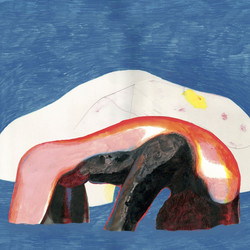
The melody from "Calling" is based on a traditional Swedish herding call, or kulning, as sung by Elin Lisslass. Issued in a gatefold card stock sleeve with folded insert and obi strip.
| 1 | What Is Not Strange? | 2:05 | |
| 2 | Grand Trine | 6:10 | |
| 3 | Revealed Night | 3:16 | |
| 4 | Asleep to the World | 5:28 | |
| 5 | Flame of Perfect Form | 6:30 | |
| 6 | Under the Earth | 4:30 | |
| 7 | Subaru | 2:46 | |
| 8 | Time of Birds | 7:52 | |
| 9 | Calling | 5:16 | |
| 10 | Plume | 6:22 | |
| 11 | This World’s Beauty | 1:40 |
- Will Work For Good
- Design
- Julie Sadowski
- Image Editor [Color correction]
- Dave Polster
- Lacquer Cut By
- Stephan Mathieu
- Mixed By, Mastered By
- Dicky Bahto
- Photography By
- Tashi Wada
- Producer, Written By, Recorded By [Additional recording]
- Chris Cohen
- Recorded By
- Ezra Buchla
- Recorded By [Additional recording]
- Julia Holter
- Recorded By [Additional recording]