Magico brings together three musicians from three continents: the American bassist Charlie Haden, the Norwegian saxophonist Jan Garbarek and the Brazilian guitarist and pianist Egberto Gismonti. Recorded in Oslo in June 1979 and released by ECM in 1980, this is the first album by a trio in which each member brings his own tunes. The music sits between jazz, Nordic melody and Brazilian song, and it was followed by more recordings from the same group.
Haden and Garbarek both knew the world of Keith Jarrett, from his American and European quartets respectively, and Garbarek had already played with Gismonti on Sol do Meio Dia. Here Haden plays double bass, Garbarek tenor and soprano saxophones, and Gismonti guitars and piano. The session took place at Talent Studio, with Jan Erik Kongshaug as engineer and Manfred Eicher as producer. The cover pairs a photograph by Herbert Wenn with design by Barbara Wojirsch. The repertoire is shared out: two pieces by Gismonti, one each by Haden and Garbarek, and Bailarina, credited to Piry Reis and Geraldo Eduardo Carneiro.
Bailarina opens the album at over fourteen minutes, built on long, graceful arcs for saxophone, guitar and bass. Gismonti's title track is driven by a jangling guitar figure, with Garbarek's sharp-edged saxophone laid over it. Haden's Silence is the most intimate piece, a slow exchange between saxophone and bass, with Gismonti at the piano. In Garbarek's Spor Haden draws a dark bowed line in the low register. The short Palhaço, by Gismonti, closes the set in a calmer, more focused mood.
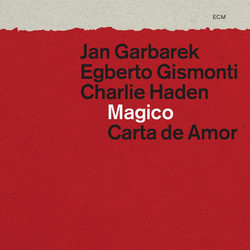
Writing on ECM Reviews in 2011, Tyran Grillo heard in Silence "some of the gentlest relays between Garbarek and Haden alongside Gismonti's frothy pianism". He also praised the understated virtuosity of Bailarina. At AllMusic, Scott Yanow found the combination worked well and called the release picturesque and continually interesting. The trio recorded a second studio album, Folk Songs, and toured. A concert from Munich's Amerika Haus in April 1981 appeared much later as Magico: Carta de Amor in 2012.
This is the CD edition of ECM 1151, first released in 1980.