Red Lanta is a duo album by the American pianist Art Lande and the Norwegian saxophonist Jan Garbarek, released by ECM in 1974. It was Lande's first record for the label, and every tune on it is his. The title is an anagram of his name. It also marks an early step in Garbarek's turn towards a more lyrical, melodic way of playing.
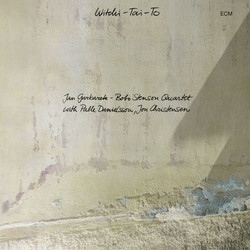
The session took place on 19 and 20 November 1973 at Arne Bendiksen Studio in Oslo, with Jan Erik Kongshaug engineering and Manfred Eicher producing. Lande, born in New York in 1947, plays piano throughout. Garbarek alternates between flutes, soprano saxophone and bass saxophone. In Jazz Journal in 2019, Michael Tucker noted that the duo was recorded about ten days before the Garbarek/Stenson Quartet's Witchi-Tai-To. He placed it at the point where Garbarek moved away from the fierce free playing of Afric Pepperbird, Sart and Triptykon towards a more melodic, consonant language.
Lande writes in spacious voicings and slowly shifting, sometimes chromatic harmonies, closer to impressionism than to bebop. The eleven-minute Awakening – Midweek is the longest and most reflective piece, with a melancholy that runs through much of the record. Verdulac takes a different route: Garbarek sets up a pulsing bass saxophone ostinato and later repeats short soprano figures over the piano, a pattern Tucker compared to minimalism. In the short closing piece, Cherifen Dream Of Renate, Garbarek reportedly heard an echo of Swedish folk song. Tyran Grillo of ECM Reviews singled out the tracks where Garbarek plays flute.
The record divided critics. Down Beat called it "one of the finest albums ECM has yet released" and wrote that the interplay of the two players "elicits the full richness of the music." Roger Dean, reviewing it in Jazz Journal in August 1974, praised the recording but found Lande "a very pale shadow" of Chick Corea and Keith Jarrett. Lande went on to record for ECM through the 1970s and 1980s, beginning in 1976 with his group Rubisa Patrol.
This CD edition of ECM 1038, first released in 1974, was reissued on 17 May 2019 in the Touchstones series, which ECM started in 2008 to bring key catalogue albums back in cardboard sleeves.