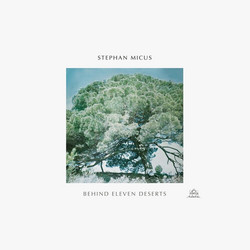
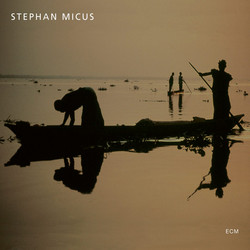
Nomad Songs is the 21st album by Stephan Micus for ECM, eleven pieces he composed and recorded alone, layering instruments from cultures that would never meet in their own traditions. The title points to peoples such as the Gnawa of Morocco and the San of Botswana, whose ways of life have been pushed to the margins by modern states. It also points to Micus, who regards himself as a musical nomad.
Micus made the album in his own MCM Studios between 2012 and 2014, multitracking every part himself, as he has done for decades. He plays nine instruments. Two are new to his work. The genbri is a camel-skin lute of the Gnawa, used here in an enlarged form. The ndingo is a lamellophone of the San close to the kalimba, here with its keys rearranged. He also restrung a rewab with three gut strings, plays a 14-string guitar of his own design and added finger holes to his shakuhachi. The palette is completed by the Balinese suling, the nay, the rabab, steel-string and twelve-string guitars, tin whistles and his own voice.
Rhythmic pieces alternate with meditative ones around the solo vocal The Blessing, placed at the centre of the sequence. The opening Everywhere, Nowhere is a duet for ndingo and genbri, the buzz of the lamellophone amplified by a wooden sounding box. On Laughing At Thunder five genbri are stacked into a dry, physical bass music. The closing Under The Chinar Trees combines three ndingo with shakuhachi and voice in textures that recall gamelan.
Tyran Grillo of ECM Reviews wrote that the closing piece makes for "one of the most beautiful experiences he has ever committed to record". Milo Miles, writing in The Arts Fuse in 2015, described Micus's long relationship with ECM as "a remarkable display of label-performer loyalty". In Germany, Ulrich Steinmetzger of the Leipziger Volkszeitung heard the album as a homage to the nomadic peoples of the world. Winfried Dulisch in Audio placed these songs between rapt distance from the world and an earthy directness unusual for Micus.
This is the CD edition, ECM 2409, first released on 26 June 2015, with a 16-page booklet.