Kyanos is the second ECM album that the Norwegian pianist and composer Jon Balke made with his Magnetic North Orchestra, following Further. The ensemble had started as a percussion group, a string quartet and a jazz sextet combined, and here it is pared down to a septet of Scandinavian soloists. The title is Greek for blue. The eleven short pieces run together as one continuous structure, and Balke writes for the particular sounds of his players, as Duke Ellington or Gil Evans did.
Balke plays piano and keyboards. Around him are two trumpeters, Per Jørgensen, who also sings, and Arve Henriksen. The rest of the septet is saxophones and flute, the cello of Svante Henryson, the double bass of Anders Jormin, and drums and percussion. The album was recorded in November 2001 at Rainbow Studio in Oslo, engineered by Jan Erik Kongshaug and produced by Balke with Manfred Eicher. Henryson wrote the closing piece, Apsis, and everything else is by Balke.
Several titles come from biology, among them Zygotos, Ganglion, In vitro and Karyon. The opening Phanai starts from a splintered, spacious piano chord before percussion and brass slowly enter. Ganglion narrows the group to a conversation between piano, bass and drums. In Katabolic the two trumpets are set against intermittent swells of synthesizer, while Karyon, with Jørgensen's voice, has the firmest groove of the set. Throughout, the cello is the only string instrument, and Henryson uses it for short, pointed statements rather than long lines.
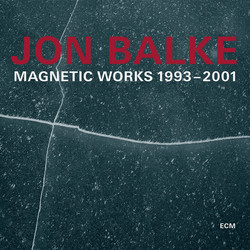
In Jazzwise, Stuart Nicholson heard textures that "billow or hang in the air like a dense Nordic fog" and called the result hypnotic and mesmerising. Philip Clark, writing for Jazzreview, described "an engaging and intelligent release by a true composer with an innate understanding of the demands of improvising soloists". Writing in Jazzpodium, Volker Doberstein heard the short pieces as small theatrical acts, each developed at an epic pace. Music from this album and from Further was later gathered on the double set Magnetic Works 1993-2001.
This is the CD edition, ECM 1822, first released on 13 May 2002, with cover artwork drawn from video stills by Audun Aagre.