Private City is the most popular of John Surman's multi-tracked solo albums for ECM. Part of its music began life in the theatre, written for a ballet of the same name staged at Sadler's Wells. Surman is the only musician on the record. He composed all eight pieces and built them in the studio, laying saxophones, bass clarinet and recorders over his own synthesizer patterns. The result is one player sounding like a small, very personal band.
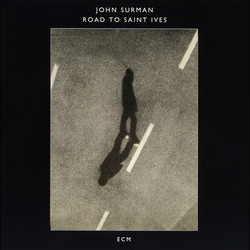
Surman plays bass clarinet, recorders, soprano and baritone saxophones and synthesizer. The album was recorded digitally in December 1987 at Rainbow Studio in Oslo, with Jan Erik Kongshaug engineering, and produced by Surman together with Manfred Eicher. According to the notes on the release, Portrait of a Romantic and Not Love Perhaps come from Private City, a ballet choreographed by Susan Crow and premiered by Sadler's Wells Royal Ballet in 1987. In his ECM catalogue the album sits between two other solo records, Withholding Pattern (recorded 1984) and Road to Saint Ives (recorded 1990).
The opening Portrait of a Romantic sets the tone, a wavering recorder melody over soft keyboard chords, with the bass clarinet moving slowly underneath. Not Love Perhaps is built on a repeating synthesizer sequence that climbs and turns back on itself while the soprano saxophone sings a line with the shape of a folk tune. The closing The Wizard's Song brings the low reeds to the front, and here the synthesizer supplies percussive cross-rhythms instead of a background wash. Elsewhere, on Roundelay, the baritone lopes around under a lead soprano line.
In Jazz Journal (February 1989), Simon Adams admired Surman's baritone, "achieving a full and solid sound that is never deadweight", and the new prominence of the bass clarinet. He found that "beneath their surface ease is an underlying tension", the quality that gives the record its plaintive character. Writing on Between Sound and Space in 2012, Tyran Grillo called it an album of incidental ballet music "that remains one of Surman's most personal". He singled out The Wizard's Song as its crowning piece.
This is the CD edition of ECM 1366, first released in 1988. It was reissued in September 2008 in the first batch of Touchstones, forty ECM albums returned to print in card sleeves with their original artwork.