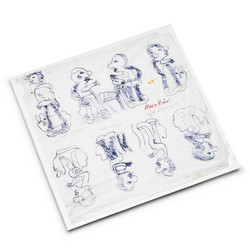
Maurizio Bianchi
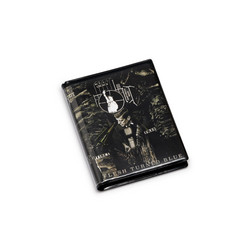
Mectpyo Box (10CD)
Tracked express shipping from Italy, no customs or import VAT in the EU. Shipping costs
Maurizio Bianchi - aka M.B. - began composing in 1979, working in the lineage of Pierre Schaeffer's musique concrète: a practice rooted in the concrete manipulation of recorded sound rather than traditional notation. His stated aim was "to produce technological sounds and in such a way to work on complete realising of the modern decadence". From his early tape works as Sacher-Pelz to the LPs issued between 1981 and 1984, M.B. developed a singular compositional language - one that would prove deeply influential on subsequent generations of electronic and experimental composers. In 1983 Bianchi withdrew from music, returning only in 1998. His early works remain essential documents in the history of electroacoustic music.
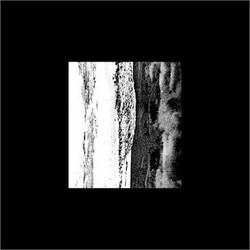
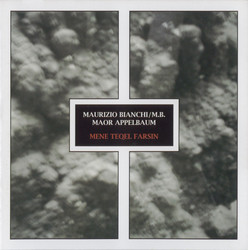
Originally released in 2015, this box set collects M.B.'s complete studio recordings from 1981-1984 - ten albums that constitute a remarkably coherent body of work. A slipcase containing 10 CDs, each reproducing one of the LPs with original artwork and layout faithfully preserved. The collection opens with Symphony for a Genocide (1981), released on Nigel Ayers' Sterile Records. A work of considerable formal ambition, it announced M.B.'s compositional concerns from the outset: the use of industrial textures as structural material, the transformation of mechanical sound into something approaching the ritualistic. Menses (1982) explores the darker recesses of the sonic spectrum with an almost clinical precision. Neuro Habitat (1982) introduces elements of dub and delay into M.B.'s palette, creating works of suspended tension where electronic textures slowly unfold and transform.
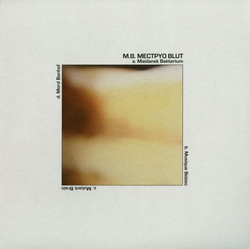
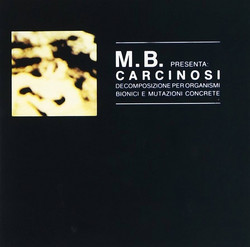
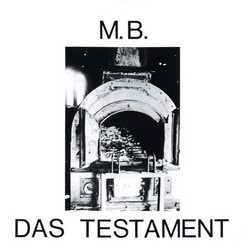
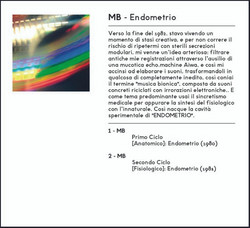
Regel (1982) marks a refinement of M.B.'s approach, with noise elements integrated into more structured electronic compositions. Mectpyo Bakterium (1982) offers two extended pieces that demonstrate a remarkable command of duration and development. Das Testament (1983) combines synthesizer and tape loops into dense, layered constructions. Endometrio (1982) and Carcinosi (1983) work with density and saturation as compositional parameters. The Plain Truth (1983), released on Broken Flag, and Armaghedon (1984) complete the cycle - by this point Bianchi had developed a fully realized aesthetic language, one that continues to resonate in contemporary electronic music.
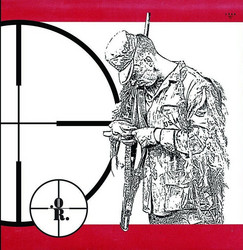
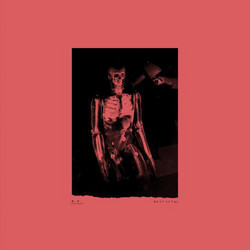
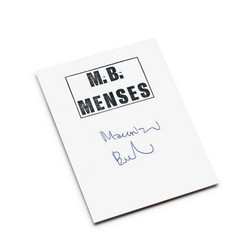
The collection also includes M.B.'s contributions to international compilations on Bain Total, Broken Flag, Come Organisation and TRAX, along with tracks from cassette compilations and mail art collaborations. A live recording and interview from January 1st, 1983 provides valuable documentary context. Containing original artworks and collages summoning to a total of 84 pages, M.B. playlists from 1981 and 1982, a 1981 interview from Datenverarbeitung, essays by M.B. himself on Throbbing Gristle, Whitehouse, SPK, Conrad Schnitzler and Monte Cazazza, excerpts from the Dictionary of the Ultra-Glaciality, and Vittore Baroni's legendary essay Milan Burns. Also included is Fanta Punk Tale from 1978, a fascinating early document that predates M.B.'s mature electronic work. Each CD comes in a cardboard sleeve reproducing the original LP artwork, with a numbered inlay card. 200 copies were made - these are the last ones available.
Now available at a special birthday price. This box set offers a comprehensive view of M.B.'s early period - a body of work that stands as one of the most significant contributions to electroacoustic music of its era. Essential listening for anyone interested in the development of electronic composition in the late 20th century. Happy 70th, Maurizio.
This edition
Edition of 200, very last copies available
Release notes
Reissue of the original boxset in new packaging with 10 CDs reproducing albums issued between 1981 and 1984, plus tracks from compilations. Each CD comes in a cardboard sleeve that reproduces the original LP artwork. Includes an 84-page booklet with original artworks and collages, M.B. playlists, interviews and reviews, as well as essays by M.B. on S.P.K., Whitehouse and Come, T.G., Monte Cazazza, Metabolists, Conrad Schnitzler and excerpts from the Dictionary Of The Ultra-Glaciality. Edition…
| Symphony For A Genocide | |||
| 1-1 | Treblinka | 9:10 | |
| 1-2 | Auschwitz | 3:54 | |
| 1-3 | Maidanek | 6:34 | |
| 1-4 | Auschwitz (Reprise) | 3:42 | |
| 1-5 | Belzec | 7:12 | |
| 1-6 | Chelmno | 6:21 | |
| 1-7 | Sobibor | 9:52 | |
| 1-8 | Accop (6) Ehte | 3:05 | |
| 1-9 | Sordide Sentimental | 2:50 | |
| 1-10 | Anesthesie Total | 3:11 | |
| Menses | |||
| 2-1 | YRA | 24:34 | |
| 2-2 | SCENT | 19:45 | |
| 2-3 | Milan Bruits | 4:00 | |
| 2-4 | Industrial Murder | 4:26 | |
| 2-5 | Menstrual Bleeding | 4:03 | |
| Neuro Habitat | |||
| 3-1 | Mörder Unter Uns | 23:26 | |
| 3-2 | Neuro Habitat | 22:48 | |
| 3-3 | Plutoniumetrio | 4:15 | |
| Regel | |||
| 4-1 | 1 | 23:31 | |
| 4-2 | 2 | 23:20 | |
| 4-3 | Acido Prussico | 8:39 | |
| Mectpyo Bakterium | |||
| 5-1 | Fetish Pinksha | 24:56 | |
| 5-2 | Sterile Regles | 24:24 | |
| 5-3 | Placenta | 4:50 | |
| 5-4 | Untitled | 3:37 | |
| Das Testament | |||
| 6-1 | Das Testament (Part One) | 20:18 | |
| 6-2 | Das Testament (Part Two) | 23:29 | |
| 6-3 | M.B. Live At Radio Popolare 1/1/83 (Excerpt) | 29:26 | |
| Endometrio | |||
| 7-1 | Primo Ciclo (Anatomico): Endometrio (1980) | 23:33 | |
| 7-2 | Secondo Ciclo (Fisiologico): Endometrio (1981) | 22:48 | |
| 7-3 | Excerpt From Cold Tape | 2:56 | |
| 7-4 | Excerpt From Morder Tape | 3:09 | |
| 7-5 | Excerpt From Blut Tape | 1:38 | |
| 7-6 | Excerpt From Technology Tape | 0:20 | |
| 7-7 | Excerpt From N.H. Tape | 1:20 | |
| 7-8 | Excerpt From Das Testament | 5:55 | |
| Carcinosi | |||
| 8-1 | Terzo Ciclo (Cianotico): Carcinosi Oswiecim (1979) | 23:31 | |
| 8-2 | Quarto Ciclo (Bionico): Carcinosi Brzezinka (1982) | 23:00 | |
| 8-3 | Untitled | 3:55 | |
| 8-4 | Untitled | 8:05 | |
| The Plain Truth | |||
| 9-1 | The Plain Truth | 24:43 | |
| 9-2 | M.B.55 T.D.56 | 24:09 | |
| 9-3 | M.B. Interview | 13:42 | |
| Armaghedon | |||
| 10-1 | 1 | 23:33 | |
| 10-2 | 2 | 23:38 | |