Bruno Maderna, Laura Betti, Roberto Leydi
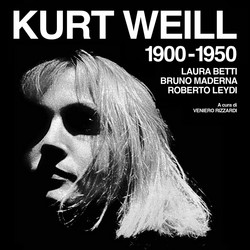
Kurt Weill 1900-1950 (Book + CD)
LabelDie SchachtelGenreComposition
Preorder: due on/around November 12, 2026 (ships as soon as it is released)
Tracked express shipping from Italy, no customs or import VAT in the EU. Shipping costs
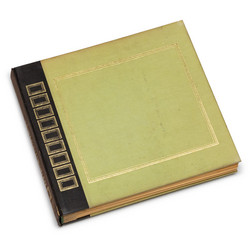
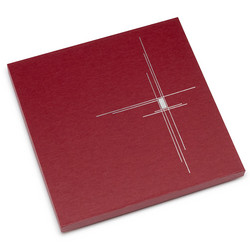
Book + CD version. 108-page book (in Italian) + audio CD, limited edition, in the Ricordi Reprints series by Die Schachtel and Archivio Storico Ricordi. Original recordings restored and remastered.
Originally released by Dischi Ricordi in 1963, Kurt Weill 1900-1933 and Kurt Weill 1933-1950 occupy a distinctive place in the history of postwar Italian recorded music. Conceived by Roberto Leydi, the two albums brought together three seemingly disparate figures: Laura Betti, an actress and singer with a strongly theatrical approach to performance; Bruno Maderna, a central figure of the European musical avant-garde; and Leydi himself, a critic, scholar, and tireless advocate of a musical culture that crossed established boundaries between genres and disciplines.
The project emerged at a crucial moment in the Italian reception of Kurt Weill and Bertolt Brecht, when the legacy of Weimar musical theatre intersected with debates on the social function of music and the development of new forms of politically engaged song. Through a selection spanning both Weill's German and American periods, Leydi sought to present a broader understanding of the composer's artistic trajectory, questioning, at least in part, the conventional opposition between the radicalism of his Berlin years and his subsequent work for Broadway.
At the heart of these recordings lies the encounter between Laura Betti's voice and Bruno Maderna's arrangements. Betti's interpretations, removed from both operatic convention and mainstream popular singing, emphasize the dramatic, ironic, sarcastic, and often ambiguous qualities of Weill's songs. Maderna, in turn, approaches the repertoire with a stylistic freedom that reflects his familiarity with a wide range of musical languages, from jazz and theatre music to orchestral writing and timbral experimentation. The result is not an attempt at a historically faithful reconstruction of Weill's original sound, but a reinterpretation that refracts its complexity through the musical and theatrical sensibilities of early 1960s Italy.
Despite a favourable critical reception, the two albums remained commercially marginal and soon disappeared from circulation, gradually acquiring the status of collectors' rarities. Apart from a later vinyl reissue of the first volume, the recordings had never been reissued in their entirety or made available in digital format.
This new edition by Die Schachtel and Archivio Storico Ricordi brings together the complete recordings of both LPs on a single CD for the first time. Carefully restored and remastered, the original monophonic recordings regain clarity and presence while retaining their distinctive sonic character.
The CD is accompanied by a 108-page book (in Italian only) edited by Veniero Rizzardi, which reconstructs the historical, musical, and cultural circumstances surrounding the project. An extensive essay by Leo Izzo examines the reception of Weill and Brecht in postwar Italy and Maderna's contribution to the reinterpretation of Weill's repertoire. Benedetta Zucconi explores Laura Betti's artistic personality, vocal approach, and position within the musical and theatrical culture of the period. The volume also reproduces the complete original liner notes by Roberto Leydi, conceived as an integral part of the two albums and now valuable in their own right as documents of the critical culture of their time.
The illustrated section reproduces the original Ricordi materials, supplemented by newly recovered archival photographs, including images from the recording sessions. A selection of contemporary reviews provides further insight into the albums' original critical reception.
More than sixty years after their initial release, these recordings offer an opportunity to reconsider not only a particular moment in the Italian reception of Kurt Weill, but also an unusual collaboration between theatre, avant-garde music, and historical scholarship, with few parallels in the recorded music of its time.